










Girls on the Railway Crossover in the Evening by August Macke, 1913
Authentische Kunstwerke
Die von uns gedruckten Kunstwerke werden getreu nach der Originalvorlage restauriert – in der Regel aus einem Museum, einer Bibliothek oder einer privaten Sammlung. Wir ersetzen, zeichnen nicht neu und erfinden das Werk des Künstlers niemals mithilfe generativer KI.
Weihnachtslieferung & Geschenke

Direkt an die beschenkte Person senden
Fügen Sie in Ihrem Warenkorb eine Geschenknachricht hinzu und geben Sie dann an der Kasse die Lieferadresse der Empfängerin oder des Empfängers ein. Wir drucken Ihre Nachricht auf eine Karte. Dem Paket werden keine Preise beigefügt.
Lieferzeit
Die Standardlieferung ist weltweit kostenlos und dauert in der Regel etwa 3 Werktage. Sie senden ein Geschenk ins Ausland? Wir fertigen die meisten Bestellungen vor Ort, im Land der Empfängerin oder des Empfängers.
Bitte planen Sie bei personalisierten Bestellungen zusätzliche Zeit für Gestaltung und Druckfreigabe ein. Lieferdetails ansehen.
Rücksendungen: Standardbestellungen können innerhalb von 90 Tagen nach Lieferung zurückgegeben oder umgetauscht werden. Personalisierte und individuell angefertigte Stücke sind in der Regel von Rückgaben bei Nichtgefallen ausgeschlossen. Unsere Rückgaberichtlinie ansehen.
Black Friday Sale
Wählen Sie einen Artikel und erhalten Sie 20 % Rabatt.
Wählen Sie zwei Werke und erhalten Sie 30 % Rabatt auf beide. Sie können Karten und Kunstwerke beliebig kombinieren.
Es ist kein Code erforderlich. Das Angebot wird automatisch angewendet.
Vollständige Geschäftsbedingungen
Das Angebot für Sammler gilt für berechtigte Werke in Standardkonfigurationen auf Bestellung. Maßanfertigungen, personalisierte Designs und Auftragsarbeiten sind ausgeschlossen. Produkte mit „personalised“ oder „custom“ im Namen sind in der Regel ausgeschlossen.
Das Angebot wird als zwei separate automatische Rabatte verwaltet: einer für kleinere Formate und einer für größere Formate. Um sich zu qualifizieren, müssen Sie zwei berechtigte Werke innerhalb derselben Formatgruppe erwerben. Karten und Kunstdrucke können innerhalb jeder Gruppe beliebig kombiniert werden.
Beispielsweise qualifizieren sich zwei berechtigte Drucke im Format A4 oder 8 × 10 Zoll für 30 % Rabatt auf beide. Ein Druck in kleinerem Format und ein Werk in größerem Format qualifizieren sich nicht gemeinsam, da Artikel aus unterschiedlichen Formatgruppen nicht kombiniert werden können, um die Voraussetzung von zwei Artikeln zu erfüllen.
Es ist kein Rabattcode erforderlich. Jeder berechtigte Rabatt wird automatisch in Ihrem Warenkorb und an der Kasse angewendet.
Weihnachtslieferung & Geschenke
Direkt an die beschenkte Person senden
Fügen Sie in Ihrem Warenkorb eine Geschenknachricht hinzu und geben Sie dann an der Kasse die Lieferadresse der Empfängerin oder des Empfängers ein. Wir drucken Ihre Nachricht auf eine Karte. Dem Paket werden keine Preise beigefügt.
Lieferzeit
Die Standardlieferung ist weltweit kostenlos und dauert in der Regel etwa 3 Werktage. Sie senden ein Geschenk ins Ausland? Wir fertigen die meisten Bestellungen vor Ort, im Land der Empfängerin oder des Empfängers.
Bitte planen Sie bei personalisierten Bestellungen zusätzliche Zeit für Gestaltung und Druckfreigabe ein. Lieferdetails ansehen.
Rücksendungen: Standardbestellungen können innerhalb von 90 Tagen nach Lieferung zurückgegeben oder umgetauscht werden. Personalisierte und individuell angefertigte Stücke sind in der Regel von Rückgaben bei Nichtgefallen ausgeschlossen. Unsere Rückgaberichtlinie ansehen.
Größe wählen
Ausführung wählen


(Mehr Infos)
Geschenkmitteilung & individuelle Ausführung

Wenn Sie eine Geschenkmitteilung oder eine Ausführung (Puzzle, Aluminiumplatte usw.) hinzufügen möchten, die hier nicht verfügbar ist, geben Sie dies bitte in der "Bestellnotiz" beim Checkout an.
Jede Bestellung wird individuell angefertigt. Wenn Sie die Größe leicht anpassen oder auf einem ungewöhnlichen Material drucken lassen möchten, lassen Sie es uns einfach wissen. Wir haben im Laufe der Jahre Tausende von individuellen Bestellungen bearbeitet, daher gibt es (fast) nichts, was wir nicht bewältigen können.
Sie können uns auch kontaktieren, bevor Sie bestellen, wenn Sie möchten!
- Hergestellt in Australia. Sicher geliefert
- Kommt einwandfrei an – oder wir ersetzen es
-
Weihnachtslieferung & Geschenke Weihnachtslieferung & Geschenke
![Ein Beispiel der gedruckten Geschenknachrichtenkarte in voller Größe anzeigen]()
Direkt an die beschenkte Person senden
Fügen Sie in Ihrem Warenkorb eine Geschenknachricht hinzu und geben Sie dann an der Kasse die Lieferadresse der Empfängerin oder des Empfängers ein. Wir drucken Ihre Nachricht auf eine Karte. Dem Paket werden keine Preise beigefügt.
Lieferzeit
Die Standardlieferung ist weltweit kostenlos und dauert in der Regel etwa 3 Werktage. Sie senden ein Geschenk ins Ausland? Wir fertigen die meisten Bestellungen vor Ort, im Land der Empfängerin oder des Empfängers.
Bitte planen Sie bei personalisierten Bestellungen zusätzliche Zeit für Gestaltung und Druckfreigabe ein. Lieferdetails ansehen.
Rücksendungen: Standardbestellungen können innerhalb von 90 Tagen nach Lieferung zurückgegeben oder umgetauscht werden. Personalisierte und individuell angefertigte Stücke sind in der Regel von Rückgaben bei Nichtgefallen ausgeschlossen. Unsere Rückgaberichtlinie ansehen.
- Hilfe bei der Bestellung?
Das sagen unsere Kunden
Mehr als 8.000 Fünf-Sterne-Bewertungen aus aller Welt


August Macke’s Girls on the Railway Crossover in the Evening, painted in 1913, turns an ordinary modern encounter into a tightly orchestrated...
WeiterlesenAugust Macke’s Girls on the Railway Crossover in the Evening, painted in 1913, turns an ordinary modern encounter into a tightly orchestrated composition of figures, tracks and fading light. Two girls occupy the central foreground, their simplified forms caught within a restless structure of diagonals and curves. Around them, the railway crossing breaks the ground into intersecting bands, while darker shapes and softer atmospheric passages suggest a landscape receding beyond. The scene feels momentary yet carefully balanced: human movement and engineered geometry held together in a single, concentrated view.
Macke was among the leading figures of German Expressionism and a key participant in the circle around Der Blaue Reiter. Although he absorbed the radical experiments of the European avant-garde, his own work frequently remained rooted in recognisable aspects of contemporary life: people walking, shopping, gathering in parks or passing through the changing spaces of the modern city. Here, the railway is more than incidental scenery. Crossings, rails and embankments belonged to the increasingly familiar visual language of early twentieth-century modernity, and Macke uses their angular structure to animate an otherwise fleeting evening scene.
A closer look
The two figures act as the composition’s still point, even as their postures imply movement. Rendered in broad grey forms and edged by darker contours, they appear to advance through a space that is continually shifting around them. Fine pale streaks articulate parts of their clothing and gestures, preventing the figures from becoming solid silhouettes. Macke gives only what is necessary to establish their presence; individual detail is subordinated to rhythm, shape and the relationship between one figure and the other.
Below and beside them, densely intersecting lines establish the crossing. Some run sharply across the lower portion of the scene, while others turn diagonally towards the centre, directing the eye back to the girls. The varied thickness of these marks creates a visual distinction between structural elements without describing every rail or boundary literally. Particularly at the left and lower edges, cross-hatching and compressed dark strokes produce a sense of accumulated movement, as though several routes briefly converge beneath the figures’ feet.
The surroundings become less definite towards the upper part of the painting. Staggered lines and blurred forms suggest railway infrastructure, distant ground and perhaps the contours of a landscape, but they are allowed to merge into evening atmosphere. Deep charcoal passages provide weight, silvery greys soften the distance, and touches of chalky white catch against the darker field. The contrast creates depth without conventional modelling: space is assembled through overlapping planes and abrupt tonal shifts rather than through meticulous perspective.
Context and significance
Created during the intensely productive years immediately before the First World War, the painting belongs to a period in which Macke was developing a particularly lucid form of Expressionism. He shared Der Blaue Reiter’s interest in colour and formal simplification, yet often differed from the group’s more spiritual or visionary tendencies. His favoured subjects were frequently secular and immediate, drawn from everyday public life. Figures in his paintings do not usually perform grand narratives; they stroll, pause, look and pass one another, becoming elements within larger patterns of colour and space.
Macke died in 1914, making works from 1913 part of the final phase of a remarkably brief career. Girls on the Railway Crossover in the Evening demonstrates the economy he had achieved by then: a complex setting reduced to a few forceful relationships, and an unremarkable journey made visually compelling through compression, contrast and rhythm. The crossing remains recognisable, but its converging lines transform it into an expressive framework for the girls’ passage through the dusk.
Choosing the right size and finish
Artwork can feel intimate at smaller sizes and dramatically more architectural at larger ones. Use the room preview, model image and size guide to see how the proportions and scale will work in your space.
If you need an exact size, specialist framing or help planning a larger display, ask our workshop for advice.
The model in the listing images is holding the 18x24in (45x60cm) version of this art print.
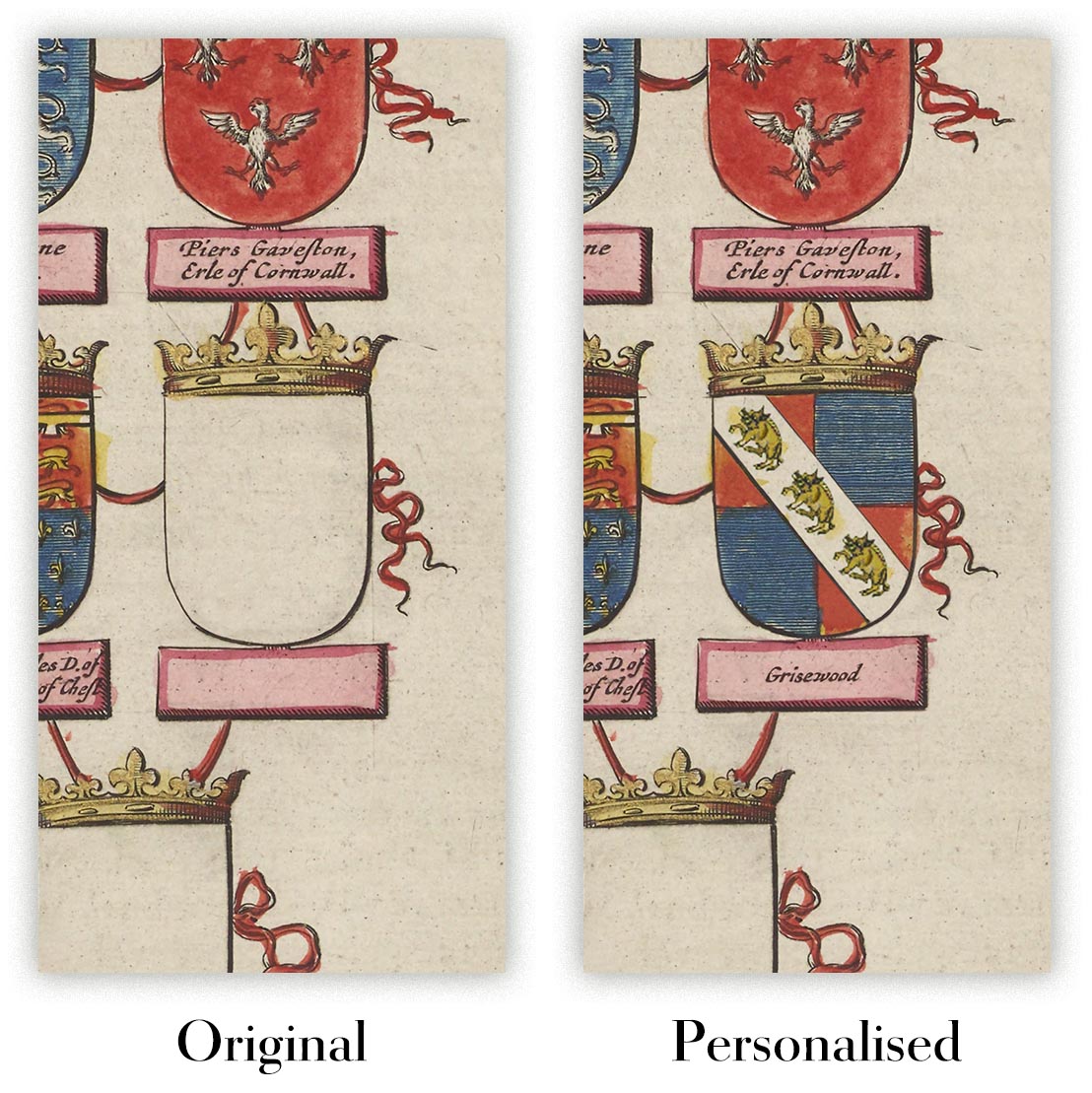
Where personalisation is available, you can add a short title or dedication, or one considered visual detail. See examples of personalised artwork.
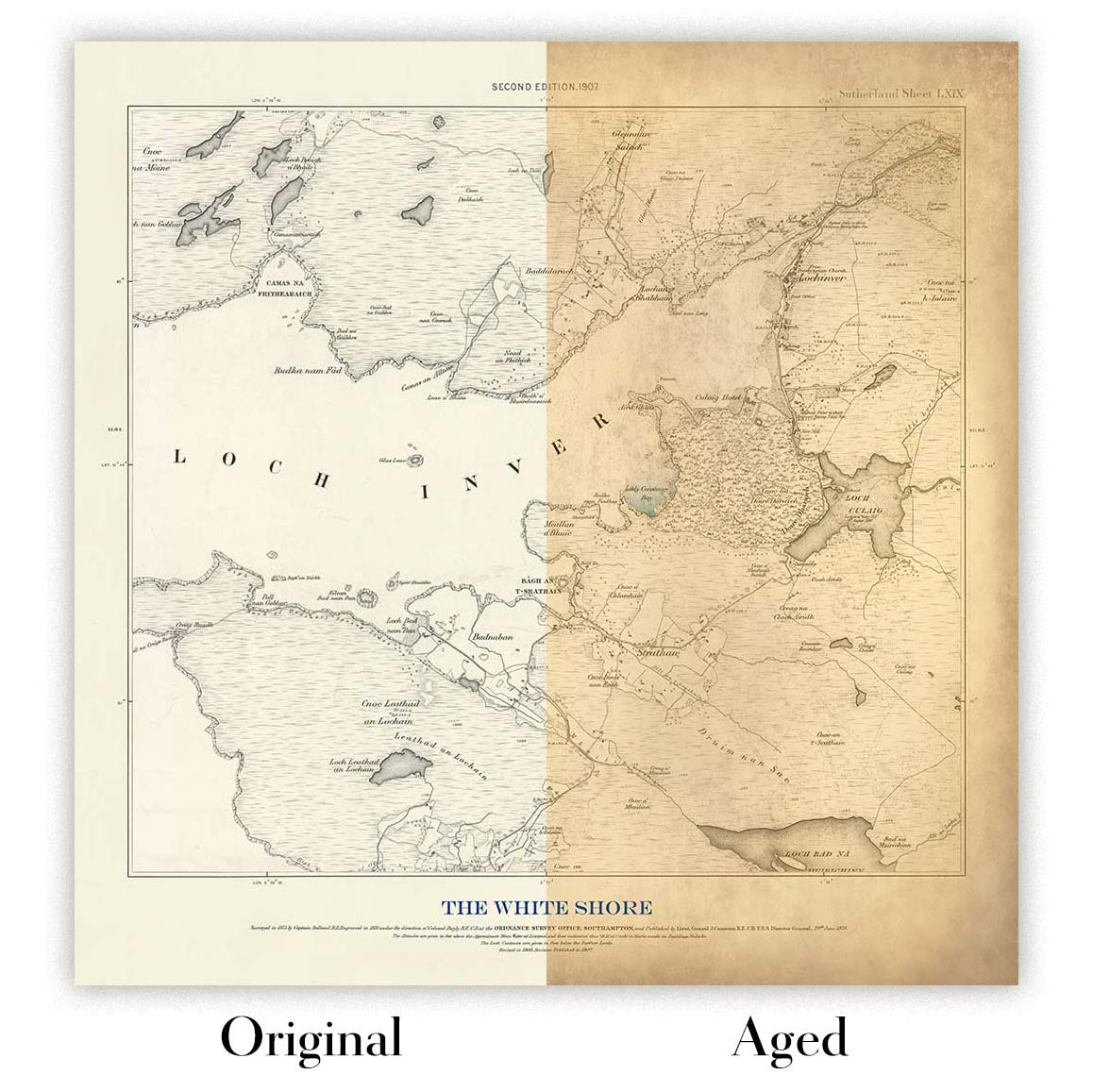
Choose Original to retain the colour and character of the source artwork, or Aged for a warmer, more antique appearance. See examples of our Aged artwork.
Every piece is produced to archival standards using fade-resistant pigment inks on acid-free matte art paper. Choose an art print, framed art print or framed canvas using the finish options above.
Framed art prints use crystal-clear optical acrylic for excellent clarity, lower weight and safer delivery than glass. Each piece arrives professionally framed and ready to hang.
Selected artworks can be produced at statement sizes up to 3 metres (10ft). Custom sizing and specialist framing are also available. If the exact option you need is not listed, contact our workshop.
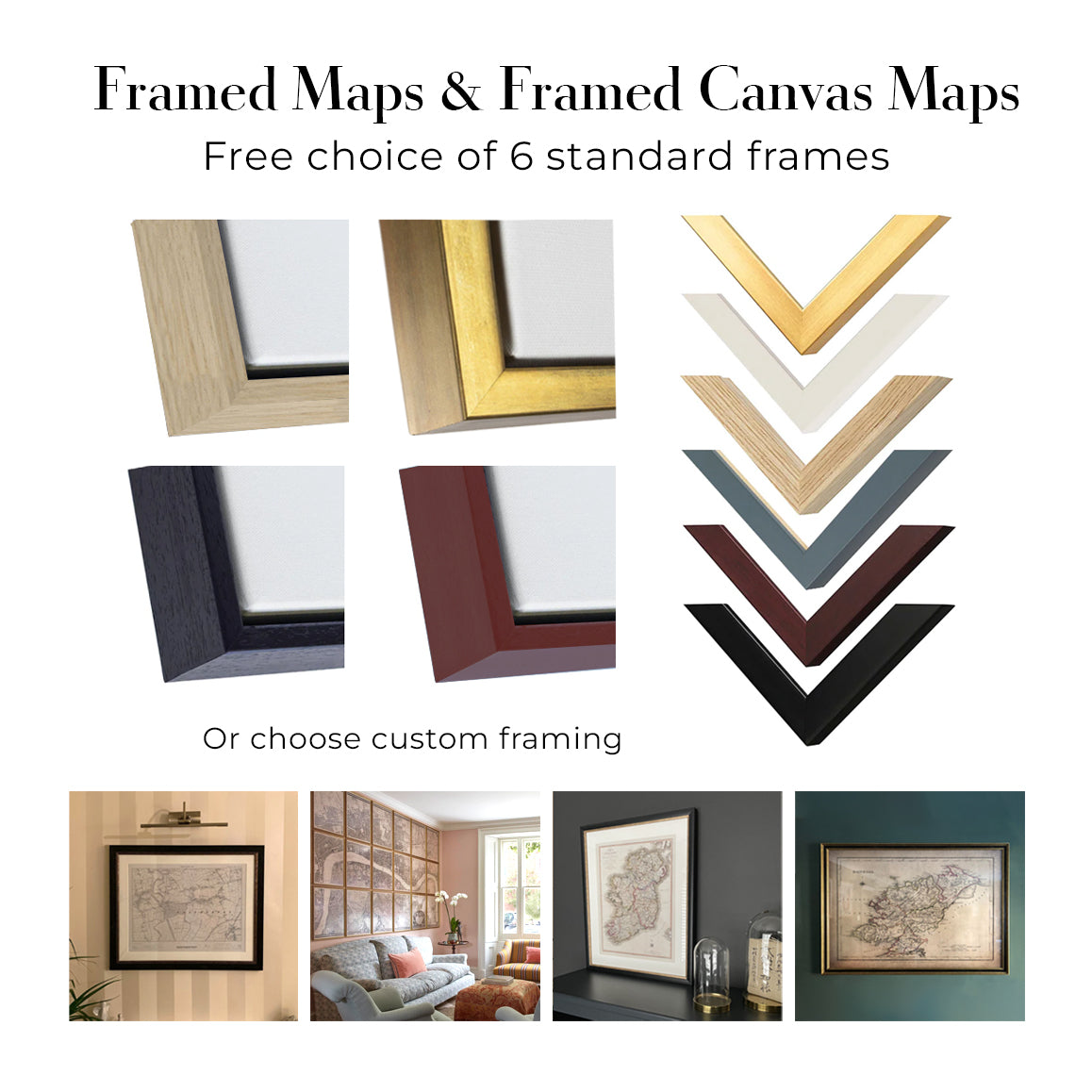
This artwork is also available as a float framed canvas, sometimes known as a shadow gap framed canvas or canvas floater. The work is printed on artist's cotton canvas and then stretched over a handmade box frame. We then "float" the canvas inside a wooden frame, which is available in a range of colours (black, dark brown, oak, antique gold and white). This is a wonderful way to present an art print without glazing in front. See some examples of float framed canvas art and explore the differences between my different finishes.
August Macke’s Girls on the Railway Crossover in the Evening, painted in 1913, turns an ordinary modern encounter into a tightly orchestrated composition of figures, tracks and fading light. Two girls occupy the central foreground, their simplified forms caught within a restless structure of diagonals and curves. Around them, the railway crossing breaks the ground into intersecting bands, while darker shapes and softer atmospheric passages suggest a landscape receding beyond. The scene feels momentary yet carefully balanced: human movement and engineered geometry held together in a single, concentrated view.
Macke was among the leading figures of German Expressionism and a key participant in the circle around Der Blaue Reiter. Although he absorbed the radical experiments of the European avant-garde, his own work frequently remained rooted in recognisable aspects of contemporary life: people walking, shopping, gathering in parks or passing through the changing spaces of the modern city. Here, the railway is more than incidental scenery. Crossings, rails and embankments belonged to the increasingly familiar visual language of early twentieth-century modernity, and Macke uses their angular structure to animate an otherwise fleeting evening scene.
A closer look
The two figures act as the composition’s still point, even as their postures imply movement. Rendered in broad grey forms and edged by darker contours, they appear to advance through a space that is continually shifting around them. Fine pale streaks articulate parts of their clothing and gestures, preventing the figures from becoming solid silhouettes. Macke gives only what is necessary to establish their presence; individual detail is subordinated to rhythm, shape and the relationship between one figure and the other.
Below and beside them, densely intersecting lines establish the crossing. Some run sharply across the lower portion of the scene, while others turn diagonally towards the centre, directing the eye back to the girls. The varied thickness of these marks creates a visual distinction between structural elements without describing every rail or boundary literally. Particularly at the left and lower edges, cross-hatching and compressed dark strokes produce a sense of accumulated movement, as though several routes briefly converge beneath the figures’ feet.
The surroundings become less definite towards the upper part of the painting. Staggered lines and blurred forms suggest railway infrastructure, distant ground and perhaps the contours of a landscape, but they are allowed to merge into evening atmosphere. Deep charcoal passages provide weight, silvery greys soften the distance, and touches of chalky white catch against the darker field. The contrast creates depth without conventional modelling: space is assembled through overlapping planes and abrupt tonal shifts rather than through meticulous perspective.
Context and significance
Created during the intensely productive years immediately before the First World War, the painting belongs to a period in which Macke was developing a particularly lucid form of Expressionism. He shared Der Blaue Reiter’s interest in colour and formal simplification, yet often differed from the group’s more spiritual or visionary tendencies. His favoured subjects were frequently secular and immediate, drawn from everyday public life. Figures in his paintings do not usually perform grand narratives; they stroll, pause, look and pass one another, becoming elements within larger patterns of colour and space.
Macke died in 1914, making works from 1913 part of the final phase of a remarkably brief career. Girls on the Railway Crossover in the Evening demonstrates the economy he had achieved by then: a complex setting reduced to a few forceful relationships, and an unremarkable journey made visually compelling through compression, contrast and rhythm. The crossing remains recognisable, but its converging lines transform it into an expressive framework for the girls’ passage through the dusk.
Choosing the right size and finish
Artwork can feel intimate at smaller sizes and dramatically more architectural at larger ones. Use the room preview, model image and size guide to see how the proportions and scale will work in your space.
If you need an exact size, specialist framing or help planning a larger display, ask our workshop for advice.
The model in the listing images is holding the 18x24in (45x60cm) version of this art print.
Where personalisation is available, you can add a short title or dedication, or one considered visual detail. See examples of personalised artwork.
Choose Original to retain the colour and character of the source artwork, or Aged for a warmer, more antique appearance. See examples of our Aged artwork.
Every piece is produced to archival standards using fade-resistant pigment inks on acid-free matte art paper. Choose an art print, framed art print or framed canvas using the finish options above.
Framed art prints use crystal-clear optical acrylic for excellent clarity, lower weight and safer delivery than glass. Each piece arrives professionally framed and ready to hang.
Selected artworks can be produced at statement sizes up to 3 metres (10ft). Custom sizing and specialist framing are also available. If the exact option you need is not listed, contact our workshop.
This artwork is also available as a float framed canvas, sometimes known as a shadow gap framed canvas or canvas floater. The work is printed on artist's cotton canvas and then stretched over a handmade box frame. We then "float" the canvas inside a wooden frame, which is available in a range of colours (black, dark brown, oak, antique gold and white). This is a wonderful way to present an art print without glazing in front. See some examples of float framed canvas art and explore the differences between my different finishes.
Viele unserer Karten und Kunstdrucke werden als stilvolle Geschenke für Wohnungen, Büros, Arbeitszimmer und bedeutungsvolle Orte ausgewählt.
Wählen Sie eine gerahmte Option für das einfachste, fertig zum Aufhängen vorbereitete Geschenk, oder entscheiden Sie sich für einen ungerahmten Druck, wenn die beschenkte Person möglicherweise lieber ihren eigenen Rahmen auswählen möchte.
Wir fertigen Bestellungen lokal in 24 Ländern weltweit, sodass Geschenke oft in der Nähe der empfangenden Person produziert werden können. Das hilft, dass sie schneller ankommen, sicherer transportiert werden und keine Überraschungen durch Zoll- oder Einfuhrgebühren entstehen.
- Wir können direkt an die empfangende Person liefern. Es werden keine Preisinformationen beigelegt.
- Ihrer Bestellung kann eine Geschenknachricht hinzugefügt werden. Wir drucken sie auf eine schöne Karte.
- Gerahmte Stücke werden fertig zum Aufhängen geliefert
- Ungerahmte Drucke werden sorgfältig in einer stabilen Schutztube verpackt
- Nahezu jede Bestellung wird lokal gefertigt – für schnelleres und sichereres Schenken
- 90 Tage Rückgaberecht geben der empfangenden Person Zeit zur Entscheidung
Wenn Sie nicht sicher sind, was Sie wählen sollen, kontaktieren Sie uns bitte. Wir helfen Ihnen gerne dabei, die richtige Karte, Größe, Ausführung oder Lieferoption auszuwählen.
Für die meisten Bestellungen beträgt die Lieferzeit etwa 3 Werktage. Personalisierte und maßgeschneiderte Produkte benötigen länger, da ich die Personalisierung durchführen und sie Ihnen zur Genehmigung zusenden muss, was normalerweise 1 oder 2 Tage dauert.
Bitte beachten Sie, dass sehr große gerahmte Bestellungen in der Regel länger für die Herstellung und Lieferung benötigen.
Wenn Sie möchten, dass Ihre Bestellung bis zu einem bestimmten Datum ankommt, bitte kontaktieren Sie mich, bevor Sie bestellen, damit wir den besten Weg finden können, um sicherzustellen, dass Sie Ihre Bestellung rechtzeitig erhalten.
Ich drucke und rahme Karten und Kunstwerke in 23 Ländern weltweit. Das bedeutet, dass Ihre Bestellung lokal gefertigt wird, was die Lieferzeit verkürzt und sicherstellt, dass sie während der Lieferung nicht beschädigt wird. Sie zahlen nie Zoll oder Einfuhrgebühren, und wir stoßen weniger CO2 in die Luft aus.
Alle meine Karten und Kunstdrucke sind gut verpackt und werden in einem robusten Rohr versendet, wenn sie ungerahmt sind, oder von Schaum umgeben, wenn sie gerahmt sind.
Ich versuche, alle Bestellungen innerhalb von 1 oder 2 Tagen nach Erhalt Ihrer Bestellung zu versenden, obwohl einige Produkte (wie Gesichtsmasken, Tassen und Tragetaschen) länger zur Herstellung benötigen können.
Wenn Sie Express-Lieferung an der Kasse auswählen, priorisieren wir Ihre Bestellung und versenden sie per 1-Tages-Kurier (Fedex, DHL, UPS, Parcelforce).
Nächster Tag Lieferung ist auch in einigen Ländern verfügbar (USA, UK, Singapur, VAE), aber bitte versuchen Sie, früh am Tag zu bestellen, damit wir es rechtzeitig versenden können.
Lesen Sie meinen vollständigen Leitfaden zur Lieferung und lokalen Produktion
Mein Standardrahmen ist ein Galerie-Stil-Rahmen aus schwarzem Eschenholz. Er ist einfach und sieht ziemlich modern aus. Mein Standardrahmen ist etwa 20 mm (0,8 Zoll) breit.
Ich verwende super-klares Acryl (Plexiglas/Acrylt) für das Glas des Rahmens. Es ist leichter und sicherer als Glas – und es sieht besser aus, da die Reflexion geringer ist.
Sechs Standardrahmenfarben sind kostenlos erhältlich (schwarz, dunkelbraun, dunkelgrau, Eiche, weiß und antikgold).
Die meisten Karten, Kunstwerke und Illustrationen sind auch als gerahmte Leinwand erhältlich. Wir verwenden matte (nicht glänzende) Baumwollleinwand, spannen sie über einen nachhaltig beschafften Buchenrahmen und 'schweben' dann das Stück innerhalb eines Holzrahmens. Das Endergebnis ist ziemlich schön, und es gibt keine Verglasung, die im Weg ist.
Alle Rahmen werden "bereit zum Aufhängen" geliefert, entweder mit einer Schnur oder Halterungen auf der Rückseite. Sehr große Rahmen haben schwere Aufhängeplatten und/oder eine Montageschiene. Wenn Sie Fragen haben, können Sie bitte Kontakt aufnehmen.
Sehen Sie sich einige Beispiele meiner gerahmten Karten und gerahmten Leinwandkarten an.
Alternativ kann ich auch alte Karten und Kunstwerke auf Leinwand, Schaumstoffplatten, Baumwollrag und andere Materialien liefern.
Wenn Sie Ihre Karte oder Ihr Kunstwerk selbst rahmen möchten, lesen Sie bitte zuerst meinen Größenleitfaden.
Wir arbeiten mit Innenarchitekten, Unternehmen aus dem Gastgewerbe, Immobilienfachleuten, Büros und Firmenkunden an Einzelstücken sowie an größeren, abgestimmten Projekten.
Dieses Kunstwerk kann an eine bestimmte Wand, einen Raum oder ein Projekt angepasst werden, und unsere Werkstatt unterstützt Sie dabei, Maße, Material und Rahmung vor der Produktion abzustimmen.
- Exakte, übergroße und maßgefertigte Abmessungen
- Individuelle Rahmung, Kaschierung und alternative Materialien
- Abgestimmte Werke für mehrere Räume oder Standorte
- Personalisierung des Kunstwerks zur Anpassung von Farbe und Stil
- Beratung zu Kunstwerk und Rahmung durch unsere Werkstatt
- Lokale Produktion für Projekte weltweit
Besprechen Sie dieses Werk mit unserem Trade & Projects Team
Jeder restaurierte Kunstdruck beginnt mit dem Originalwerk des Künstlers – niemals mit einem KI-generierten Ersatz.
Unser Londoner Studio arbeitet mit sorgfältig ausgewähltem Ausgangsmaterial aus Museen, Bibliotheken, Archiven und privaten Sammlungen. Wir restaurieren altersbedingte Schäden, verblasste Farben und unvollkommene Reproduktionen, während wir die Komposition, den Pinselstrich, die Linienführung, die Textur und den zeittypischen Charakter des Künstlers bewahren.
Wir verwenden keine generative KI, um das Kunstwerk neu zu zeichnen, neu zu interpretieren oder zu erfinden. Digitale Restaurierung dient ausschließlich dazu, das Originalwerk so originalgetreu wie möglich wiederherzustellen und zu reproduzieren.
Sobald die Restaurierung abgeschlossen ist, wird das Masterkunstwerk für die von Ihnen gewählte Größe und Ausführung vorbereitet. Anschließend wird Ihr Stück gedruckt und, sofern ausgewählt, in der Nähe des Lieferorts gerahmt.
Unsere Giclée-Kunstdrucke verwenden säurefreies 200-g/m²-Archiv-Mattpapier und lichtechte Pigmenttinten für ein reichhaltiges Finish in Museumsqualität. Gerahmte Kunstdrucke verwenden kristallklares optisches Acryl und werden hängefertig geliefert.
Gerahmte Leinwand und Sonderausgaben auf Baumwoll-Künstlerpapier sind ebenfalls erhältlich. Erfahren Sie mehr über unsere Materialien und Ausführungen.
Seit 1984 restaurieren und fertigen wir Karten und Kunstdrucke an, und wir stehen hinter jedem einzelnen Stück.
Jede Bestellung ist durch unsere 10-Jahres-Garantie und unsere Garantie für beschädigungsfreie Lieferung abgesichert. Sollte Ihr Stück beschädigt bei Ihnen ankommen, ersetzen oder reproduzieren wir es kostenlos. Sollte sonst etwas nicht in Ordnung sein, kontaktieren Sie unser Werkstatt-Team, und wir kümmern uns umgehend darum.
Ausführliche Informationen finden Sie in unseren Rückgabe- und Erstattungsrichtlinien.


