














Old Cape of Good Hope, Cape Town, South Africa Nautical Chart by De La Rochette, 1795: Table Mt, False Bay, Stellenbosch
In unserer Londoner Werkstatt aus der Originalkarte von 1795 restauriert und in Museumsqualität gedruckt. Vollständige Beschreibung
Das Sammlerangebot
Wählen Sie zwei berechtigte Werke und erhalten Sie auf beide 20 % Rabatt. Wählen Sie drei, und das günstigste ist kostenlos – eine maximale Ersparnis von 33 %.
Kombinieren Sie berechtigte Standardkarten und Kunstdrucke nach Belieben. Kein Code erforderlich; das Angebot wird an der Kasse automatisch angewendet.
Standardmäßige Konfigurationen nach Maßanfertigung sind inbegriffen. Maßgeschneiderte Größen, personalisierte Entwürfe und Auftragsarbeiten sind ausgeschlossen.
Benötigen Sie die Lieferung an unterschiedliche Adressen? Kontaktieren Sie uns vor der Bestellung.Das Sammlerangebot
Wählen Sie zwei berechtigte Werke und erhalten Sie auf beide 20 % Rabatt. Wählen Sie drei, und das günstigste ist kostenlos – eine maximale Ersparnis von 33 %.
Kombinieren Sie berechtigte Standardkarten und Kunstdrucke nach Belieben. Kein Code erforderlich; das Angebot wird an der Kasse automatisch angewendet.
Standardmäßige Konfigurationen nach Maßanfertigung sind inbegriffen. Maßgeschneiderte Größen, personalisierte Entwürfe und Auftragsarbeiten sind ausgeschlossen.
Benötigen Sie die Lieferung an unterschiedliche Adressen? Kontaktieren Sie uns vor der Bestellung. In London restauriert • Gedruckt und gerahmt in Australia

Aus der Originalkarte von 1795 restauriert und in Museumsqualität gedruckt. Vollständige Beschreibung
Größe wählen
Ausführung wählen


(Mehr Infos)
Geschenkmitteilung & individuelle Ausführung

Wenn Sie eine Geschenkmitteilung oder eine Ausführung (Puzzle, Aluminiumplatte usw.) hinzufügen möchten, die hier nicht verfügbar ist, geben Sie dies bitte in der "Bestellnotiz" beim Checkout an.
Jede Bestellung wird individuell angefertigt. Wenn Sie die Größe leicht anpassen oder auf einem ungewöhnlichen Material drucken lassen möchten, lassen Sie es uns einfach wissen. Wir haben im Laufe der Jahre Tausende von individuellen Bestellungen bearbeitet, daher gibt es (fast) nichts, was wir nicht bewältigen können.
Sie können uns auch kontaktieren, bevor Sie bestellen, wenn Sie möchten!
Ein Stück Geschichte für Ihr Zuhause
Über 8.000 5-Sterne-Bewertungen


This late-18th-century chart, titled The Dutch Colony of the Cape of Good Hope by L.S. De La Rochette (1795), presents a richly...
WeiterlesenThis late-18th-century chart, titled The Dutch Colony of the Cape of Good Hope by L.S. De La Rochette (1795), presents a richly layered portrait of the Cape as it evolved from a refreshment station into a structured, multicultural colony. Issued by William Faden—London’s preeminent Geographer to the King—it synthesizes the newest coastal and inland intelligence of its day. From “Klipping Eyland” down to “Cape Falso,” the map fuses maritime necessities with land-based realities: the safe approach to anchorages, the dominance of mountains over settlement, and the emerging lattice of farms and towns. It is both a navigational instrument and a social document, capturing how geography directed commerce, governance, and daily life along one of the world’s pivotal sea routes.
Topography is the map’s visual grammar. The relief is sculpted through fine hachuring and tonal shading, elevating the dramatic amphitheater of Table Mountain—explicitly noted at roughly 3,400 feet—and its sentinels, Lion’s Head and Lion’s Rump. Rugged promontories such as Duivelsberg and the coastal ridge of Muyzenberg, near 1,300 feet, guide the eye—and historically, the traveler—along corridors that channeled movement across the peninsula. Beyond the coast, the Drakenstein and Kogelberg ranges impose natural limits on expansion, while features like Clogstone Kloof and the Warm Bokkeveld hint at viable passes and interior agricultural prospects. This is landscape as strategist, rendered with the elegant restraint for which De La Rochette and Faden were renowned.
Maritime intelligence anchors the composition. Tafel (Table) Bay, Saldanha Bay, and St. Helena’s Bay are drawn with commercial precision, while False Bay’s contours and the dramatic turn at the Cape of Good Hope toward Cape Falso reveal the stakes of pilotage in treacherous waters. Carefully plotted soundings, bearings, and coastal silhouettes—paired with a clear compass orientation—translate shoreline complexity into a seaman’s checklist: where to anchor, where to take shelter, and where reefs and shoals threaten hull and cargo. The interplay of bays, headlands, and currents conveys why this coast became an indispensable hinge of global trade, shaping routes, provisioning patterns, and the tempo of imperial logistics.
Cultural and economic geographies are mapped with equal care. The colony’s agricultural footprint is legible in named farms and settlements—Constantia among the vineyards, and Stellenbosch as a keystone inland town—signaling supply chains that linked hinterland produce to maritime demand. Khoisan presence appears in the depiction of “Hottentots Kraals,” a period term marking indigenous village sites, while the labeling of areas such as “Klein Caffers” reflects historical nomenclature now understood as outdated and offensive. Together with the delineated frontier toward the Drakenstein Mountains, these signs reveal a colony negotiating land, labor, and authority—its mosaic of communities, routes, and resource bases etched directly into the terrain.
Artistry and authorship amplify its authority. The decorative cartouche, populated with Cape fauna, flora, and scenes of indigenous life, frames the map as both a scientific record and a statement of place. Faden’s imprint—prized for clarity and currency—meets De La Rochette’s meticulous terrain modeling to produce a second edition attentive to newly gathered observations. The result is an 18th-century infographic in the truest sense: data-dense yet beautifully resolved, where relief shading, coastal metrics, settlement symbols, and cultural vignettes cohere into a single, legible narrative. For the historian, navigator, or connoisseur, it is a masterclass in how information, art, and empire converged at the far edge of Africa.
Notable places on this map
- Cape Town: The primary settlement and port in the colony.
- Saldanha Bay: A significant harbor noted for its strategic position.
- St. Helena's Bay: Another bay location on the western coastline.
- Tafel Bay: A notable bay associated with its connection to the coastal waters.
- Klein Caffers: An area marked on the map, indicative of local settlements.
- Drakenstein Mountains: The geographical boundary of the Dutch colony.
- Clogstone Kloof: A valley or pass contributing to regional topography.
- Warm Bokkeveld: An area referenced in the map, indicating agricultural land use.
- Kogelberg Mountains: A significant mountain range within the vicinity of False Bay.
- Cape Falso: Marked as a prominent geographical feature to the south.
Notable Features & Landmarks
- Table Mountain (Point 'a'): Noted as a significant landmark, towering about 3,400 feet high.
- Lion's Head (Point 'b'): Recognized both for its distinctive shape and navigational value.
- Lion's Rump (Point 'c'): Another peak contributing to the local topography.
- Duivelsberg (Devil's Hill) (Point 'd'): A rugged feature symbolizing the challenging terrain for settlers.
- Muyzenberg (Point 'e'): A notable mountain feature around 1,300 feet high near the coast.
- Constantia: One of the significant farms identified on the map.
- Stellenbosch: Another important settlement highlighted in the mapped areas.
- Khoisan Villages: Temporary settlements known as "Hottentots Kraals" depicted on the map.
- False Bay: A coastal feature crucial for maritime activities in the region.
- Cape of Good Hope: A pivotal geographical landmark known for its maritime significance.
- Topographical Representation: The map provides a comprehensive view, with an emphasis on mountains, valleys, and significant elevation changes through detailed shading and hachuring.
- Cultural Representation: The inclusion of indigenous huts reflects historical interactions and conflicts between settlers and the native populations.
- Cartographic Elements: The map features a decorative cartouche illustrating local wildlife, which reveals insights about the biodiversity of the area at the time.
- Nautical Information: Significant soundings and navigational aids are likely included, facilitating maritime navigation through accurate depth measurements and compass rose indications.
- Coastal Features: The detailed representation of bays and harbors indicates the importance of coastal trade routes and maritime economy.
- Land Use: The marked farms and settlements show agricultural practices and the spread of European settlement in the region.
- Geographical Boundaries: The delineation of the Dutch colony amidst natural obstacles such as mountains illustrates the challenges faced in expansion and governance.
- Cultural Demographics: The diverse populations of the area are acknowledged, reflecting the various cultural influences present in the colony.
- Historical Significance: The map serves as a pivotal reference for understanding colonial expansion and settlement patterns during a critical era in South African history.
- Artistic Detailing: The ornate detailing in the border and cartouche demonstrate the artistic skill of the mapmaker, further emphasizing its role as both a functional and aesthetic piece of cartography.
Historical and design context
- Title of the Map: The Dutch Colony of the Cape of Good Hope by L.S. De La Rochette MDCC XCV
- Date of Creation: 1795
- Mapmaker/Publisher: Created by William Faden, who was a prominent English cartographer known for his high-quality maps and atlases during the 18th century.
- Historical Context: The map is a second edition, building on the knowledge gained from earlier explorations, reflecting ongoing geographical and topographical understanding of the region in the late 18th century.
- Geographical Scope: The map covers the Cape of Good Hope region, specifically detailing the Dutch Colony of the Cape, stretching from "Klipping Eyland" to "Cape Falso."
- Cultural Representation: The cartouche includes elements indicative of local fauna and indigenous life, portraying a blend of European colonization and the indigenous presence, including huts of the Khoisan people.
- Key Themes: Major topographical features including mountains and prominent landmarks are emphasized, contributing to maritime navigation and settlement patterns.
- Countries and Regions Shown: Primarily showcases areas in present-day South Africa, highlighting significant places in the Cape Town region.
- Design and Style: The map is characterized by detailed etching and topographical relief, representing elevation through shading and hachuring, along with a decorative cartouche that showcases local flora and fauna.
- Historical Significance: The map serves as an important historical artifact, illustrating the transition of the Cape from a provisioning station to a more established multicultural settlement.
Please double check the images to make sure that a specific town or place is shown on this map. You can also get in touch and ask us to check the map for you.
This map looks great at every size, but I always recommend going for a larger size if you have space. That way you can easily make out all of the details.
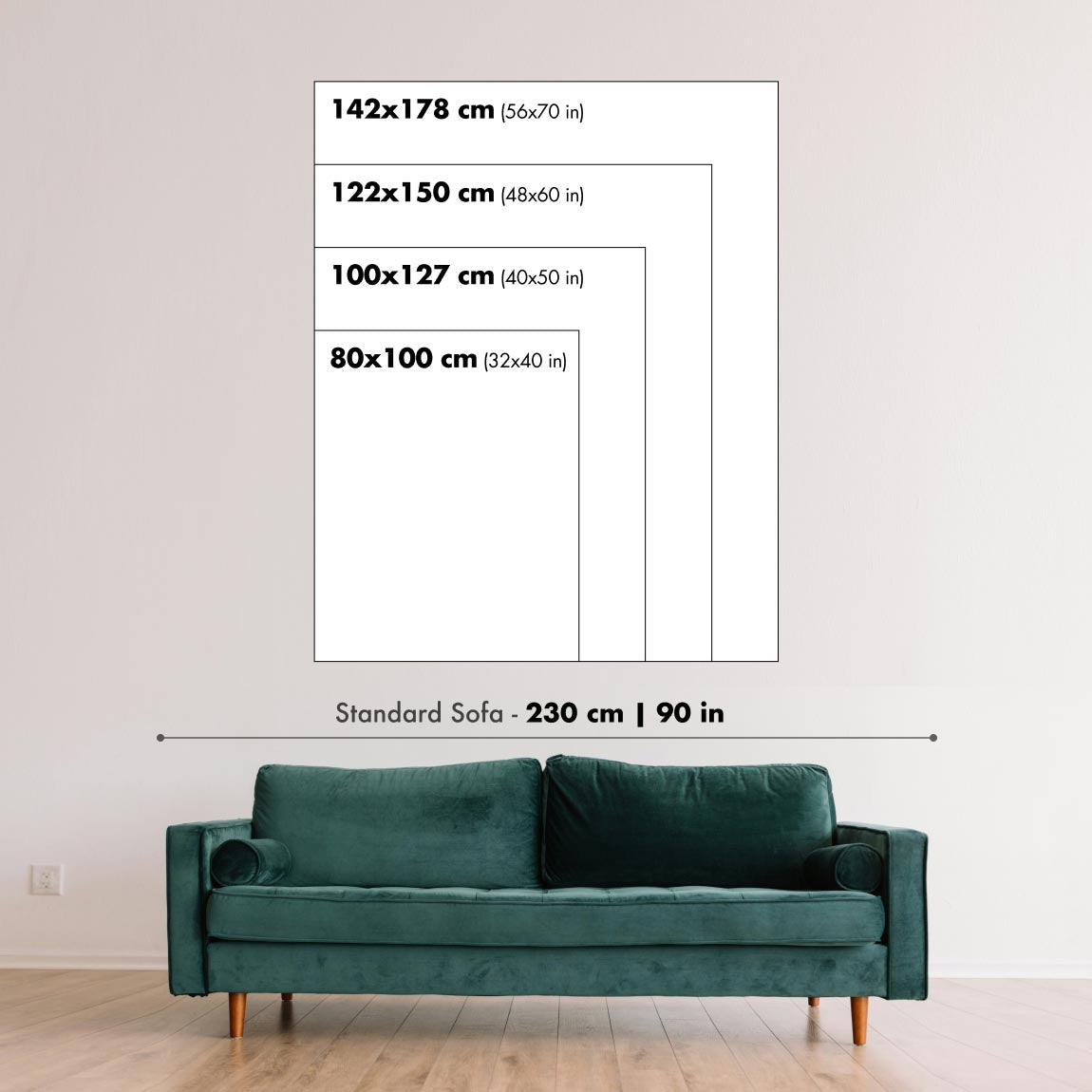
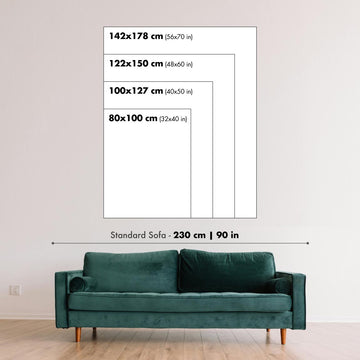
This map looks amazing at sizes all the way up to 90in (230cm). If you are looking for a larger map, please get in touch.
Please note: the labels on this map are hard to read if you order a map that is 16in (40cm) or smaller. The map is still very attractive, but if you would like to read the map easily, please buy a larger size.
The model in the listing images is holding the 24x36in (60x90cm) version of this map.
The fifth listing image shows an example of my map personalisation service.
If you’re looking for something slightly different, check out my collection of the best old maps to see if something else catches your eye.
Please contact me to check if a certain location, landmark or feature is shown on this map.
This would make a wonderful birthday, Christmas, Father's Day, work leaving, anniversary or housewarming gift for someone from the areas covered by this map.
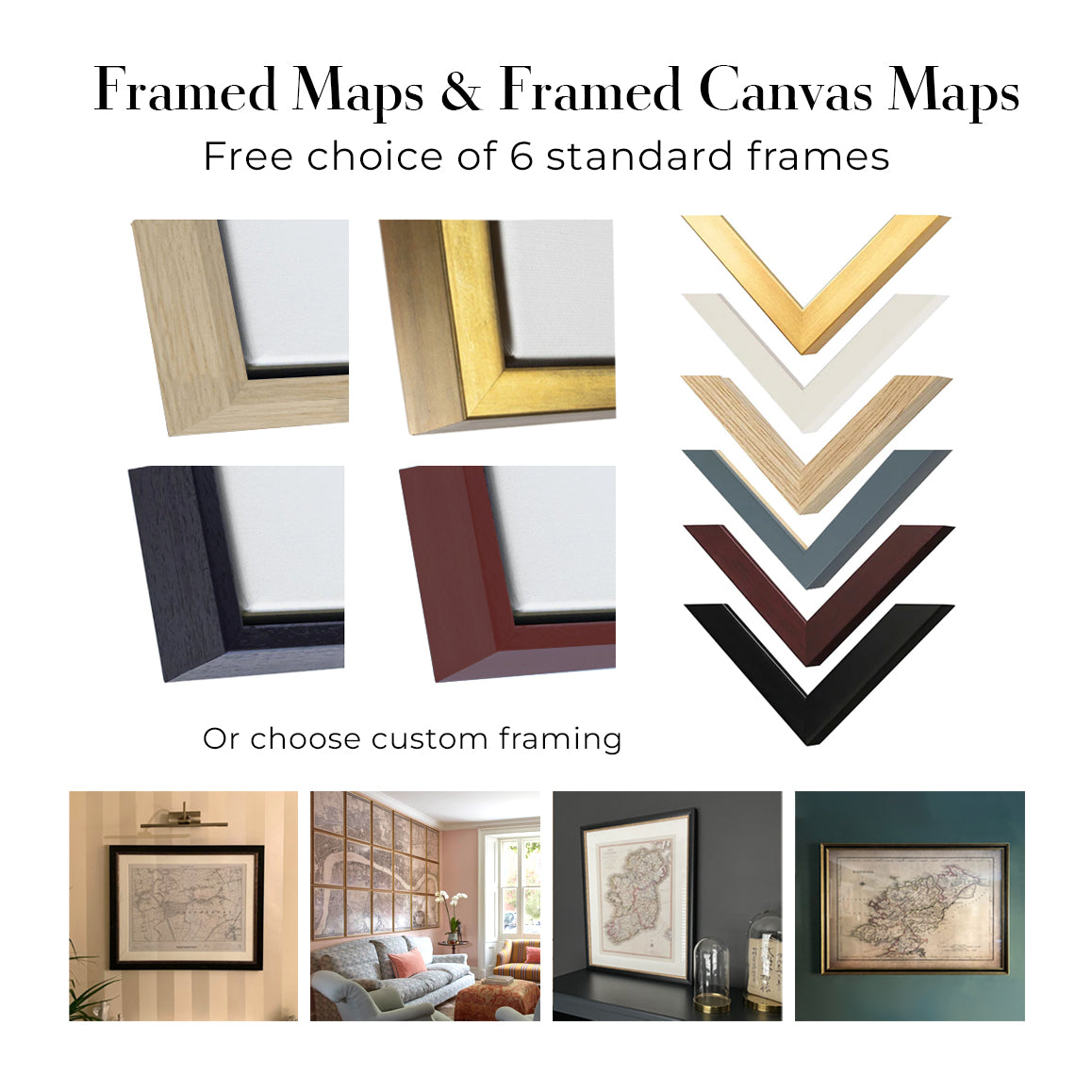
This map is available as a giclée print on acid free archival matte paper, or you can buy it framed. The frame is a nice, simple black frame that suits most aesthetics. Please get in touch if you'd like a different frame colour or material. My frames are glazed with super-clear museum-grade acrylic (perspex/acrylite), which is significantly less reflective than glass, safer, and will always arrive in perfect condition.
This map is also available as a float framed canvas, sometimes known as a shadow gap framed canvas or canvas floater. The map is printed on artist's cotton canvas and then stretched over a handmade box frame. We then "float" the canvas inside a wooden frame, which is available in a range of colours (black, dark brown, oak, antique gold and white). This is a wonderful way to present a map without glazing in front. See some examples of float framed canvas maps and explore the differences between my different finishes.
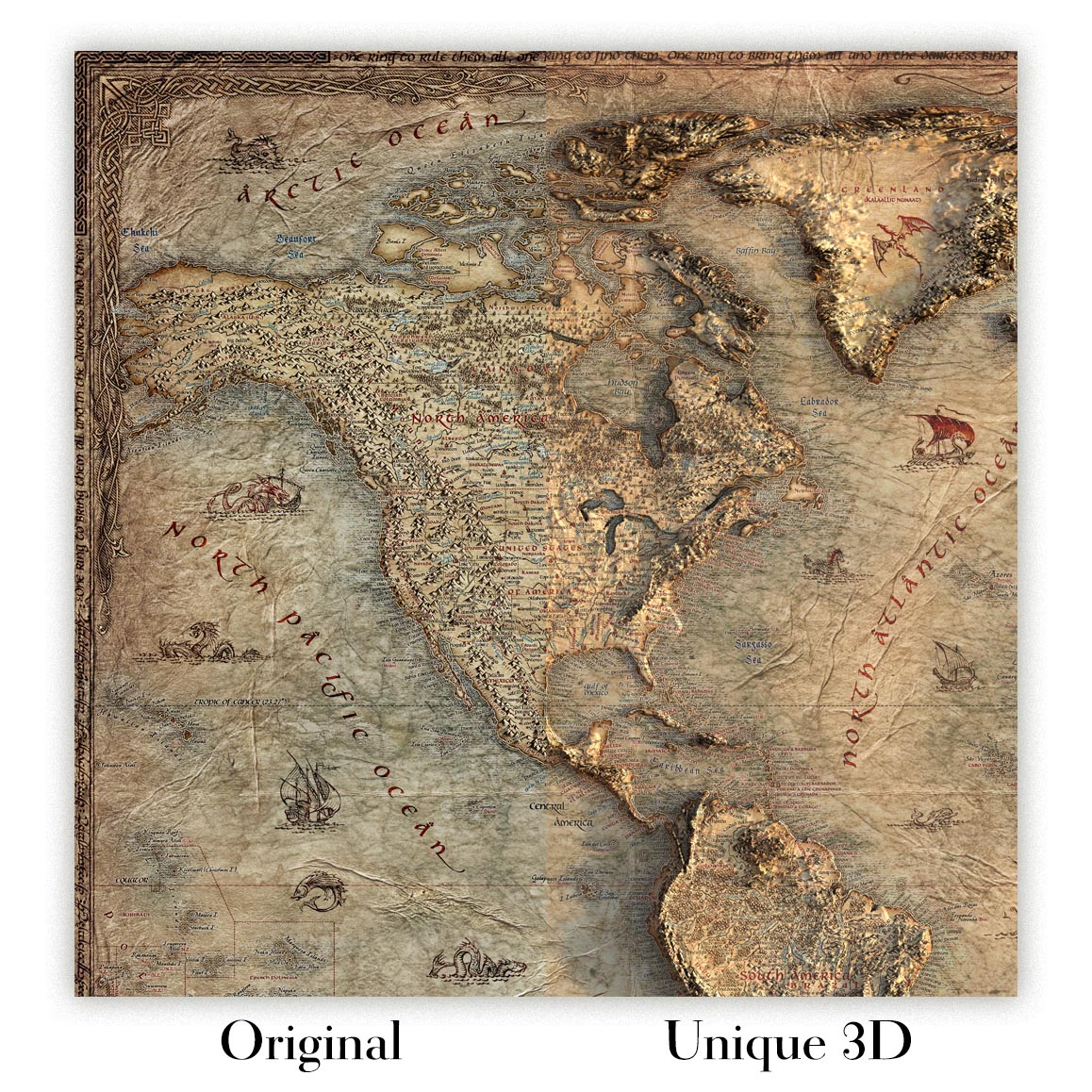
For something truly unique, this map is also available in "Unique 3D", our trademarked process that dramatically transforms the map so that it has a wonderful sense of depth. We combine the original map with detailed topography and elevation data, so that mountains and the terrain really "pop". For more info and examples of 3D maps, check my Unique 3D page.
This late-18th-century chart, titled The Dutch Colony of the Cape of Good Hope by L.S. De La Rochette (1795), presents a richly layered portrait of the Cape as it evolved from a refreshment station into a structured, multicultural colony. Issued by William Faden—London’s preeminent Geographer to the King—it synthesizes the newest coastal and inland intelligence of its day. From “Klipping Eyland” down to “Cape Falso,” the map fuses maritime necessities with land-based realities: the safe approach to anchorages, the dominance of mountains over settlement, and the emerging lattice of farms and towns. It is both a navigational instrument and a social document, capturing how geography directed commerce, governance, and daily life along one of the world’s pivotal sea routes.
Topography is the map’s visual grammar. The relief is sculpted through fine hachuring and tonal shading, elevating the dramatic amphitheater of Table Mountain—explicitly noted at roughly 3,400 feet—and its sentinels, Lion’s Head and Lion’s Rump. Rugged promontories such as Duivelsberg and the coastal ridge of Muyzenberg, near 1,300 feet, guide the eye—and historically, the traveler—along corridors that channeled movement across the peninsula. Beyond the coast, the Drakenstein and Kogelberg ranges impose natural limits on expansion, while features like Clogstone Kloof and the Warm Bokkeveld hint at viable passes and interior agricultural prospects. This is landscape as strategist, rendered with the elegant restraint for which De La Rochette and Faden were renowned.
Maritime intelligence anchors the composition. Tafel (Table) Bay, Saldanha Bay, and St. Helena’s Bay are drawn with commercial precision, while False Bay’s contours and the dramatic turn at the Cape of Good Hope toward Cape Falso reveal the stakes of pilotage in treacherous waters. Carefully plotted soundings, bearings, and coastal silhouettes—paired with a clear compass orientation—translate shoreline complexity into a seaman’s checklist: where to anchor, where to take shelter, and where reefs and shoals threaten hull and cargo. The interplay of bays, headlands, and currents conveys why this coast became an indispensable hinge of global trade, shaping routes, provisioning patterns, and the tempo of imperial logistics.
Cultural and economic geographies are mapped with equal care. The colony’s agricultural footprint is legible in named farms and settlements—Constantia among the vineyards, and Stellenbosch as a keystone inland town—signaling supply chains that linked hinterland produce to maritime demand. Khoisan presence appears in the depiction of “Hottentots Kraals,” a period term marking indigenous village sites, while the labeling of areas such as “Klein Caffers” reflects historical nomenclature now understood as outdated and offensive. Together with the delineated frontier toward the Drakenstein Mountains, these signs reveal a colony negotiating land, labor, and authority—its mosaic of communities, routes, and resource bases etched directly into the terrain.
Artistry and authorship amplify its authority. The decorative cartouche, populated with Cape fauna, flora, and scenes of indigenous life, frames the map as both a scientific record and a statement of place. Faden’s imprint—prized for clarity and currency—meets De La Rochette’s meticulous terrain modeling to produce a second edition attentive to newly gathered observations. The result is an 18th-century infographic in the truest sense: data-dense yet beautifully resolved, where relief shading, coastal metrics, settlement symbols, and cultural vignettes cohere into a single, legible narrative. For the historian, navigator, or connoisseur, it is a masterclass in how information, art, and empire converged at the far edge of Africa.
Notable places on this map
- Cape Town: The primary settlement and port in the colony.
- Saldanha Bay: A significant harbor noted for its strategic position.
- St. Helena's Bay: Another bay location on the western coastline.
- Tafel Bay: A notable bay associated with its connection to the coastal waters.
- Klein Caffers: An area marked on the map, indicative of local settlements.
- Drakenstein Mountains: The geographical boundary of the Dutch colony.
- Clogstone Kloof: A valley or pass contributing to regional topography.
- Warm Bokkeveld: An area referenced in the map, indicating agricultural land use.
- Kogelberg Mountains: A significant mountain range within the vicinity of False Bay.
- Cape Falso: Marked as a prominent geographical feature to the south.
Notable Features & Landmarks
- Table Mountain (Point 'a'): Noted as a significant landmark, towering about 3,400 feet high.
- Lion's Head (Point 'b'): Recognized both for its distinctive shape and navigational value.
- Lion's Rump (Point 'c'): Another peak contributing to the local topography.
- Duivelsberg (Devil's Hill) (Point 'd'): A rugged feature symbolizing the challenging terrain for settlers.
- Muyzenberg (Point 'e'): A notable mountain feature around 1,300 feet high near the coast.
- Constantia: One of the significant farms identified on the map.
- Stellenbosch: Another important settlement highlighted in the mapped areas.
- Khoisan Villages: Temporary settlements known as "Hottentots Kraals" depicted on the map.
- False Bay: A coastal feature crucial for maritime activities in the region.
- Cape of Good Hope: A pivotal geographical landmark known for its maritime significance.
- Topographical Representation: The map provides a comprehensive view, with an emphasis on mountains, valleys, and significant elevation changes through detailed shading and hachuring.
- Cultural Representation: The inclusion of indigenous huts reflects historical interactions and conflicts between settlers and the native populations.
- Cartographic Elements: The map features a decorative cartouche illustrating local wildlife, which reveals insights about the biodiversity of the area at the time.
- Nautical Information: Significant soundings and navigational aids are likely included, facilitating maritime navigation through accurate depth measurements and compass rose indications.
- Coastal Features: The detailed representation of bays and harbors indicates the importance of coastal trade routes and maritime economy.
- Land Use: The marked farms and settlements show agricultural practices and the spread of European settlement in the region.
- Geographical Boundaries: The delineation of the Dutch colony amidst natural obstacles such as mountains illustrates the challenges faced in expansion and governance.
- Cultural Demographics: The diverse populations of the area are acknowledged, reflecting the various cultural influences present in the colony.
- Historical Significance: The map serves as a pivotal reference for understanding colonial expansion and settlement patterns during a critical era in South African history.
- Artistic Detailing: The ornate detailing in the border and cartouche demonstrate the artistic skill of the mapmaker, further emphasizing its role as both a functional and aesthetic piece of cartography.
Historical and design context
- Title of the Map: The Dutch Colony of the Cape of Good Hope by L.S. De La Rochette MDCC XCV
- Date of Creation: 1795
- Mapmaker/Publisher: Created by William Faden, who was a prominent English cartographer known for his high-quality maps and atlases during the 18th century.
- Historical Context: The map is a second edition, building on the knowledge gained from earlier explorations, reflecting ongoing geographical and topographical understanding of the region in the late 18th century.
- Geographical Scope: The map covers the Cape of Good Hope region, specifically detailing the Dutch Colony of the Cape, stretching from "Klipping Eyland" to "Cape Falso."
- Cultural Representation: The cartouche includes elements indicative of local fauna and indigenous life, portraying a blend of European colonization and the indigenous presence, including huts of the Khoisan people.
- Key Themes: Major topographical features including mountains and prominent landmarks are emphasized, contributing to maritime navigation and settlement patterns.
- Countries and Regions Shown: Primarily showcases areas in present-day South Africa, highlighting significant places in the Cape Town region.
- Design and Style: The map is characterized by detailed etching and topographical relief, representing elevation through shading and hachuring, along with a decorative cartouche that showcases local flora and fauna.
- Historical Significance: The map serves as an important historical artifact, illustrating the transition of the Cape from a provisioning station to a more established multicultural settlement.
Please double check the images to make sure that a specific town or place is shown on this map. You can also get in touch and ask us to check the map for you.
This map looks great at every size, but I always recommend going for a larger size if you have space. That way you can easily make out all of the details.
This map looks amazing at sizes all the way up to 90in (230cm). If you are looking for a larger map, please get in touch.
Please note: the labels on this map are hard to read if you order a map that is 16in (40cm) or smaller. The map is still very attractive, but if you would like to read the map easily, please buy a larger size.
The model in the listing images is holding the 24x36in (60x90cm) version of this map.
The fifth listing image shows an example of my map personalisation service.
If you’re looking for something slightly different, check out my collection of the best old maps to see if something else catches your eye.
Please contact me to check if a certain location, landmark or feature is shown on this map.
This would make a wonderful birthday, Christmas, Father's Day, work leaving, anniversary or housewarming gift for someone from the areas covered by this map.
This map is available as a giclée print on acid free archival matte paper, or you can buy it framed. The frame is a nice, simple black frame that suits most aesthetics. Please get in touch if you'd like a different frame colour or material. My frames are glazed with super-clear museum-grade acrylic (perspex/acrylite), which is significantly less reflective than glass, safer, and will always arrive in perfect condition.
This map is also available as a float framed canvas, sometimes known as a shadow gap framed canvas or canvas floater. The map is printed on artist's cotton canvas and then stretched over a handmade box frame. We then "float" the canvas inside a wooden frame, which is available in a range of colours (black, dark brown, oak, antique gold and white). This is a wonderful way to present a map without glazing in front. See some examples of float framed canvas maps and explore the differences between my different finishes.
For something truly unique, this map is also available in "Unique 3D", our trademarked process that dramatically transforms the map so that it has a wonderful sense of depth. We combine the original map with detailed topography and elevation data, so that mountains and the terrain really "pop". For more info and examples of 3D maps, check my Unique 3D page.
Viele unserer Karten und Kunstdrucke werden als durchdachte Geschenke für Wohnungen, Büros, Arbeitszimmer und bedeutungsvolle Orte ausgewählt.
Wählen Sie eine gerahmte Option als das einfachste, fertig zum Aufhängen gelieferte Geschenk, oder entscheiden Sie sich für einen ungerahmten Druck, wenn der Empfänger seinen eigenen Rahmen lieber selbst auswählen möchte.
Wir fertigen Bestellungen lokal in 23 Ländern weltweit, sodass Geschenke oft in der Nähe des Empfängers produziert werden können. Das trägt dazu bei, dass sie schneller ankommen, sicherer transportiert werden und Überraschungen durch Zoll oder Einfuhrabgaben vermieden werden.
- Wir können direkt an den Empfänger liefern
- Gerahmte Werke werden fertig zum Aufhängen geliefert
- Ungerahmte Drucke werden sorgfältig in einer stabilen Schutzhülle versandt
- Nahezu jede Bestellung wird lokal gefertigt – für schnelleres und sichereres Schenken
- 90 Tage Rückgaberecht geben dem Empfänger Zeit für seine Entscheidung
Wenn Sie nicht sicher sind, was Sie wählen sollen, kontaktieren Sie uns bitte. Wir helfen Ihnen gern dabei, die passende Karte, Größe, Ausführung oder Lieferoption auszuwählen.
Für die meisten Bestellungen beträgt die Lieferzeit etwa 3 Werktage. Personalisierte und maßgeschneiderte Produkte benötigen länger, da ich die Personalisierung durchführen und sie Ihnen zur Genehmigung zusenden muss, was normalerweise 1 oder 2 Tage dauert.
Bitte beachten Sie, dass sehr große gerahmte Bestellungen in der Regel länger für die Herstellung und Lieferung benötigen.
Wenn Sie möchten, dass Ihre Bestellung bis zu einem bestimmten Datum ankommt, bitte kontaktieren Sie mich, bevor Sie bestellen, damit wir den besten Weg finden können, um sicherzustellen, dass Sie Ihre Bestellung rechtzeitig erhalten.
Ich drucke und rahme Karten und Kunstwerke in 23 Ländern weltweit. Das bedeutet, dass Ihre Bestellung lokal gefertigt wird, was die Lieferzeit verkürzt und sicherstellt, dass sie während der Lieferung nicht beschädigt wird. Sie zahlen nie Zoll oder Einfuhrgebühren, und wir stoßen weniger CO2 in die Luft aus.
Alle meine Karten und Kunstdrucke sind gut verpackt und werden in einem robusten Rohr versendet, wenn sie ungerahmt sind, oder von Schaum umgeben, wenn sie gerahmt sind.
Ich versuche, alle Bestellungen innerhalb von 1 oder 2 Tagen nach Erhalt Ihrer Bestellung zu versenden, obwohl einige Produkte (wie Gesichtsmasken, Tassen und Tragetaschen) länger zur Herstellung benötigen können.
Wenn Sie Express-Lieferung an der Kasse auswählen, priorisieren wir Ihre Bestellung und versenden sie per 1-Tages-Kurier (Fedex, DHL, UPS, Parcelforce).
Nächster Tag Lieferung ist auch in einigen Ländern verfügbar (USA, UK, Singapur, VAE), aber bitte versuchen Sie, früh am Tag zu bestellen, damit wir es rechtzeitig versenden können.
Lesen Sie meinen vollständigen Leitfaden zur Lieferung und lokalen Produktion
Mein Standardrahmen ist ein Galerie-Stil-Rahmen aus schwarzem Eschenholz. Er ist einfach und sieht ziemlich modern aus. Mein Standardrahmen ist etwa 20 mm (0,8 Zoll) breit.
Ich verwende super-klares Acryl (Plexiglas/Acrylt) für das Glas des Rahmens. Es ist leichter und sicherer als Glas – und es sieht besser aus, da die Reflexion geringer ist.
Sechs Standardrahmenfarben sind kostenlos erhältlich (schwarz, dunkelbraun, dunkelgrau, Eiche, weiß und antikgold).
Die meisten Karten, Kunstwerke und Illustrationen sind auch als gerahmte Leinwand erhältlich. Wir verwenden matte (nicht glänzende) Baumwollleinwand, spannen sie über einen nachhaltig beschafften Buchenrahmen und 'schweben' dann das Stück innerhalb eines Holzrahmens. Das Endergebnis ist ziemlich schön, und es gibt keine Verglasung, die im Weg ist.
Alle Rahmen werden "bereit zum Aufhängen" geliefert, entweder mit einer Schnur oder Halterungen auf der Rückseite. Sehr große Rahmen haben schwere Aufhängeplatten und/oder eine Montageschiene. Wenn Sie Fragen haben, können Sie bitte Kontakt aufnehmen.
Sehen Sie sich einige Beispiele meiner gerahmten Karten und gerahmten Leinwandkarten an.
Alternativ kann ich auch alte Karten und Kunstwerke auf Leinwand, Schaumstoffplatten, Baumwollrag und andere Materialien liefern.
Wenn Sie Ihre Karte oder Ihr Kunstwerk selbst rahmen möchten, lesen Sie bitte zuerst meinen Größenleitfaden.
Wir arbeiten mit Innenarchitekten, Unternehmen aus dem Gastgewerbe, Immobilienfachleuten, Büros und Firmenkunden an Einzelstücken sowie an größeren, abgestimmten Projekten.
Diese Karte kann an eine bestimmte Wand, einen Raum oder ein Projekt angepasst werden, und unsere Werkstatt unterstützt Sie vor der Produktion bei der Abstimmung von Abmessungen, Material und Rahmung.
- Exakte, übergroße und maßgefertigte Abmessungen
- Individuelle Rahmung, Montage und alternative Materialien
- Abgestimmte Stücke für mehrere Räume oder Standorte
- Personalisierung der Karte, um wichtige Orte zu markieren oder zusätzliche Details hinzuzufügen
- Beratung zu Karte und Rahmung durch unsere Werkstatt
- Lokale Produktion für Projekte in aller Welt
Besprechen Sie dieses Werk mit unserem Team für Trade & Projects
Meine Karten sind äußerst hochwertige Reproduktionen von Originalkarten.
Ich beziehe originale, seltene Karten aus Bibliotheken, Auktionshäusern und Privatsammlungen auf der ganzen Welt, restauriere sie in meiner Londoner Werkstatt und erstelle dann mit speziellen Giclée-Tinten und -Druckern wunderschöne Karten, die sogar noch besser aussehen als das Original.
Meine Karten werden auf säurefreiem, mattem Archivpapier (nicht glänzend) gedruckt, das sich sehr hochwertig anfühlt und fast wie Karton aussieht. Technisch gesehen beträgt das Papiergewicht/die Papierdicke 10mil/200g/m². Es eignet sich perfekt zum Einrahmen.
Ich drucke mit UV-lichtbeständigen Ultrachrome-Giclée-Pigmenttinten von Epson – einige der besten Tinten, die Sie finden können.
Ich kann auch machen Karten auf Leinwand, Baumwolllappen und andere exotische Materialien.
Erfahren Sie mehr über The Unique Maps Co.
Kartenpersonalisierung
Wenn Sie nach dem perfekten Geschenk zum Jahrestag oder zur Einweihung suchen, kann ich Ihre Karte personalisieren, um sie wirklich einzigartig zu machen. Ich kann beispielsweise eine kurze Nachricht hinzufügen, einen wichtigen Ort hervorheben oder das Wappen Ihrer Familie hinzufügen.
Die Möglichkeiten sind nahezu unbegrenzt. Bitte sehen Sie sich meine Kartenpersonalisierungsseite für einige wunderbare Beispiele dessen, was möglich ist.
Um eine personalisierte Karte zu bestellen, wählen Sie „Personalisieren Sie Ihre Karte“, bevor Sie sie in den Warenkorb legen.
In Kontakt kommen wenn Sie nach komplexeren Anpassungen und Personalisierungen suchen.
Kartenalterung
Im Laufe der Jahre wurde ich von Kunden hunderte Male gefragt, ob sie eine Karte kaufen könnten, die noch älter.
Nun, jetzt können Sie das, indem Sie „Alter“ auswählen, bevor Sie eine Karte in Ihren Warenkorb legen.
Alle Produktfotos, die Sie auf dieser Seite sehen, zeigen die Karte in ihrer Originalform. So sieht die Karte heute aus.
Wenn Sie „Gealtert“ auswählen, werde ich Ihre Karte von Hand altern lassen. Dazu verwende ich ein spezielles und einzigartiges Verfahren, das ich durch jahrelanges Studium alter Karten und Gespräche mit Forschern zum Verständnis der Chemie alternder Papiere entwickelt habe, und natürlich ... viel Übung!
Wenn Sie sich nicht sicher sind, bleiben Sie bei der Originalfarbe der Karte. Wenn Sie etwas Dunkleres und älter Wenn Sie auf der Suche sind, entscheiden Sie sich für „Aged“.
Sehen Sie einige erstaunliche Beispiele für gealterte Karten.
Seit 1984 restaurieren und fertigen wir Karten und Kunstdrucke an, und wir stehen hinter jedem einzelnen Stück.
Jede Bestellung ist durch unsere 10-Jahres-Garantie und unsere Garantie für beschädigungsfreie Lieferung abgesichert. Sollte Ihr Stück beschädigt bei Ihnen ankommen, ersetzen oder reproduzieren wir es kostenlos. Sollte sonst etwas nicht in Ordnung sein, kontaktieren Sie unser Werkstatt-Team, und wir kümmern uns umgehend darum.
Ausführliche Informationen finden Sie in unseren Rückgabe- und Erstattungsrichtlinien.


