












Narcissus intermedius (Plate 7) by Pierre Joseph Redouté, 1805
Obra de arte auténtica
La obra de arte que imprimimos se restaura fielmente a partir de la fuente original, normalmente un museo, biblioteca o colección privada. Nunca sustituimos, redibujamos ni inventamos la obra del artista utilizando IA generativa.
Entrega navideña y regalos

Envíelo directamente al destinatario
Añada un mensaje de regalo en su cesta y, a continuación, introduzca la dirección de entrega del destinatario al finalizar la compra. Imprimiremos su mensaje en una tarjeta. No se incluyen precios en el paquete.
Plazos de entrega
La entrega estándar es gratuita en todo el mundo y suele tardar alrededor de 3 días laborables. ¿Envía un regalo al extranjero? Producimos la mayoría de los pedidos localmente, en el país del destinatario.
Prevea tiempo adicional para el diseño y la aprobación de la prueba en los pedidos personalizados. Ver detalles de entrega.
Devoluciones: Los pedidos estándar pueden devolverse o cambiarse dentro de los 90 días posteriores a la entrega. Las piezas personalizadas y hechas a medida suelen quedar excluidas de las devoluciones por cambio de opinión. Consulte nuestra política de devoluciones.
Oferta de Black Friday
Elija un artículo y obtenga un 20 % de descuento.
Elija dos obras y reciba un 30 % de descuento en ambas. Puede combinar mapas y láminas artísticas.
No se requiere ningún código. La oferta se aplica automáticamente.
Términos y condiciones completos
La Oferta del Coleccionista se aplica a las obras elegibles en configuraciones estándar hechas por encargo. Se excluyen los tamaños a medida, los diseños personalizados y los trabajos por encargo. Los productos con “personalised” o “custom” en su nombre suelen estar excluidos.
La oferta se administra como dos descuentos automáticos independientes: uno para formatos pequeños y otro para formatos grandes. Para poder optar, debe comprar dos obras elegibles dentro del mismo grupo de formato. Los mapas y las láminas artísticas pueden combinarse dentro de cada grupo.
Por ejemplo, dos láminas elegibles en A4 o de 8 × 10 in pueden beneficiarse de un 30 % de descuento en ambas. Una lámina de formato pequeño y una obra de formato grande no cumplen conjuntamente los requisitos, ya que los artículos de distintos grupos de formato no pueden combinarse para alcanzar el requisito de dos artículos.
No se requiere ningún código de descuento. Cualquier descuento aplicable se aplica automáticamente en su cesta y al finalizar la compra.
Christmas schedule filling up. Order early.
Christmas orders & our workshop schedule
Our Christmas schedule is filling up, particularly for personalised maps and bespoke pieces. Ordering early allows time to prepare your artwork, complete any design approvals, and arrange printing and framing.
If your order requires a design preview, we’ll ask for your approval before printing. A prompt reply helps us keep your order moving through the workshop.
For standard maps and art prints, check the delivery estimate shown on the page. Larger framed orders travel more slowly through the logistics networks. Personalised and bespoke orders need time for design and approval.
Planning something more involved, or working to a particular deadline? Contact the workshop before ordering and we’ll help you check what’s possible.
Elige el formato
Elige el acabado


(Más información)
Mensaje de regalo y acabado personalizado

Si deseas agregar un mensaje de regalo, o un acabado (rompecabezas, tablero de aluminio, etc.) que no esté disponible aquí, por favor solicítalo en la "nota del pedido" cuando realices la compra.
Cada pedido es hecho a medida, así que si necesitas que el tamaño se ajuste ligeramente, o que se imprima en un material inusual, háznoslo saber. Hemos realizado miles de pedidos personalizados a lo largo de los años, así que hay (casi) nada que no podamos gestionar.
También puedes contactarnos antes de hacer tu pedido, ¡si lo prefieres!
- Hecho en Australia. Entrega segura
- Llega perfecto o lo reemplazamos
-
Entrega y regalos de Navidad Entrega navideña y regalos
![Ver un ejemplo a tamaño completo de la tarjeta impresa con mensaje de regalo]()
Envíelo directamente al destinatario
Añada un mensaje de regalo en su cesta y, a continuación, introduzca la dirección de entrega del destinatario al finalizar la compra. Imprimiremos su mensaje en una tarjeta. No se incluyen precios en el paquete.
Plazos de entrega
La entrega estándar es gratuita en todo el mundo y suele tardar alrededor de 3 días laborables. ¿Envía un regalo al extranjero? Producimos la mayoría de los pedidos localmente, en el país del destinatario.
Prevea tiempo adicional para el diseño y la aprobación de la prueba en los pedidos personalizados. Ver detalles de entrega.
Devoluciones: Los pedidos estándar pueden devolverse o cambiarse dentro de los 90 días posteriores a la entrega. Las piezas personalizadas y hechas a medida suelen quedar excluidas de las devoluciones por cambio de opinión. Consulte nuestra política de devoluciones.
- ¿Necesitas ayuda para hacer tu pedido?
En palabras de nuestros clientes
Más de 8.000 reseñas de cinco estrellas de todo el mundo


Pierre-Joseph Redouté’s Les Liliacées, Pl. 07, dated 1805, presents Narcissus intermedius as a complete botanical portrait rather than a simple cluster of...
Seguir leyendoPierre-Joseph Redouté’s Les Liliacées, Pl. 07, dated 1805, presents Narcissus intermedius as a complete botanical portrait rather than a simple cluster of flowers. A slender stem rises between two blade-like leaves, carrying two open yellow blooms and a tightly furled bud. Their vivid colour is set against a spacious, pale ground, while the exposed bulb and roots at lower right reveal the plant’s less decorative, but scientifically essential, structures.
The plate belongs to Redouté’s celebrated Les Liliacées, produced during an early nineteenth-century flowering of botanical publishing. At a time of expanding interest in plant classification and horticulture, such illustrations served both aesthetic and scholarly purposes: they had to convey identifying structures clearly while preserving the character of a living specimen. Redouté, a French artist renowned for his flower studies, was particularly adept at reconciling these demands. Here, disciplined observation is matched by an unusually luminous handling of yellow, green and warm earth tones.
A closer look
The composition is governed by a strong upward movement. Two narrow leaves begin close to the base and extend almost the full height of the plate, their gently differing angles preventing the arrangement from becoming rigidly symmetrical. Between them, the flowering stem bends subtly beneath its blossoms. One flower opens towards the left, revealing the flared trumpet and radiating petals in profile; the other turns outward, allowing a fuller view of its rounded form. Above them, the unopened bud provides a compact counterpoint to the expansive blooms.
Redouté builds the flowers from delicate tonal transitions rather than emphatic outlines. Deeper golden yellow gathers around the trumpets and inner folds, becoming paler towards the petal edges. Fine veins and restrained shading give each bloom curvature without sacrificing clarity. The leaves are similarly nuanced: rich green at their centres, they lighten along the edges and carry a slight sheen that distinguishes their smooth surfaces from the softer petals.
At lower right, the bulb introduces a markedly different group of textures. Its light-brown skin is modelled with muted shading, while a fringe of thin roots descends in finely separated lines. Smaller numbered studies and faint botanical outlines appear to the left of the principal stem, shifting attention from the plant’s overall habit to its individual parts. Beneath the specimen, the label “Narcisse Intermedius” anchors the composition within the language of botanical study.
Context and significance
Les Liliacées emerged from a culture in which close looking was central to both science and art. Botanical plates enabled plants to be examined beyond the garden or growing season, recording characteristics that written descriptions alone could not communicate as immediately. The generous negative space in this plate is therefore functional as well as elegant: every leaf, root and floral structure remains distinct, unobscured by scenery or ornament.
Yet Redouté’s study never feels merely diagrammatic. The asymmetry of the stem, the subtle overlap of leaves and the contrast between brilliant blossoms and earthy bulb give the specimen a quiet vitality. It is this balance—between classification and presence, precision and grace—that makes the plate characteristic of Redouté’s enduring contribution to botanical illustration.
Choosing the right size and finish
Artwork can feel intimate at smaller sizes and dramatically more architectural at larger ones. Use the room preview, model image and size guide to see how the proportions and scale will work in your space.
If you need an exact size, specialist framing or help planning a larger display, ask our workshop for advice.
The model in the listing images is holding the 36x24in (90x60cm) version of this art print.
Where personalisation is available, you can add a short title or dedication, or one considered visual detail. See examples of personalised artwork.
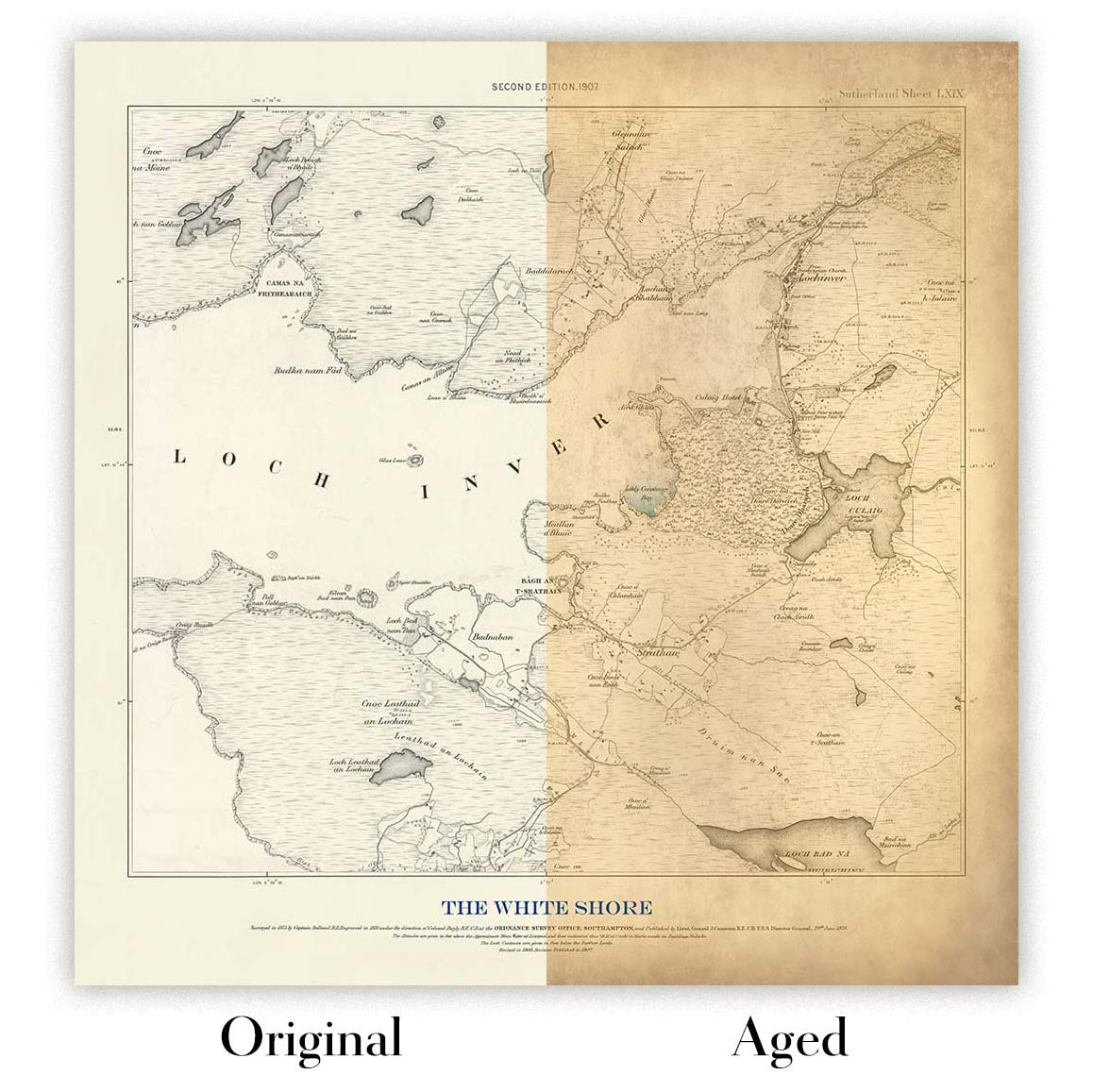
Choose Original to retain the colour and character of the source artwork, or Aged for a warmer, more antique appearance. See examples of our Aged artwork.
Every piece is produced to archival standards using fade-resistant pigment inks on acid-free matte art paper. Choose an art print, framed art print or framed canvas using the finish options above.
Framed art prints use crystal-clear optical acrylic for excellent clarity, lower weight and safer delivery than glass. Each piece arrives professionally framed and ready to hang.
Selected artworks can be produced at statement sizes up to 3 metres (10ft). Custom sizing and specialist framing are also available. If the exact option you need is not listed, contact our workshop.
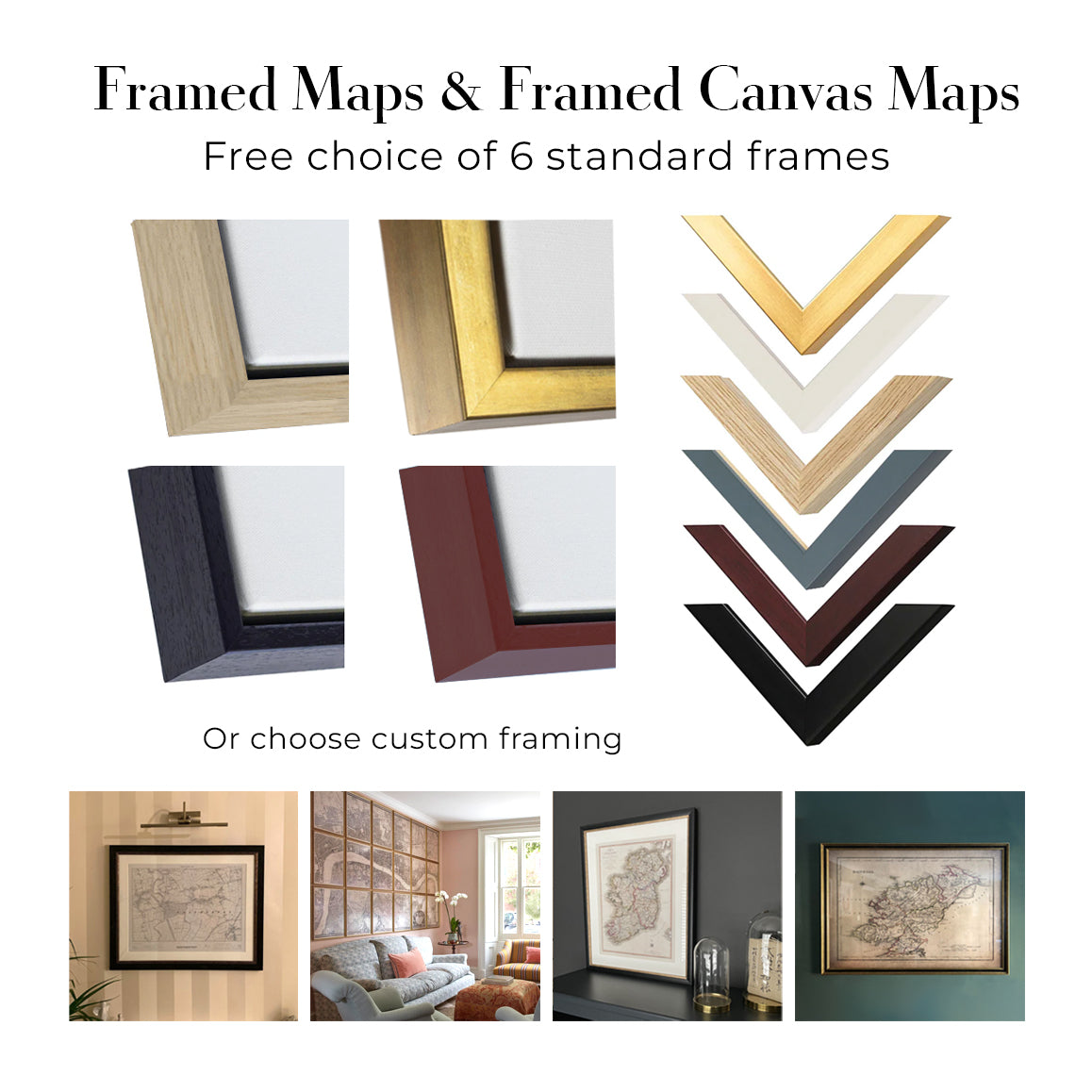
This artwork is also available as a float framed canvas, sometimes known as a shadow gap framed canvas or canvas floater. The work is printed on artist's cotton canvas and then stretched over a handmade box frame. We then "float" the canvas inside a wooden frame, which is available in a range of colours (black, dark brown, oak, antique gold and white). This is a wonderful way to present an art print without glazing in front. See some examples of float framed canvas art and explore the differences between my different finishes.
Pierre-Joseph Redouté’s Les Liliacées, Pl. 07, dated 1805, presents Narcissus intermedius as a complete botanical portrait rather than a simple cluster of flowers. A slender stem rises between two blade-like leaves, carrying two open yellow blooms and a tightly furled bud. Their vivid colour is set against a spacious, pale ground, while the exposed bulb and roots at lower right reveal the plant’s less decorative, but scientifically essential, structures.
The plate belongs to Redouté’s celebrated Les Liliacées, produced during an early nineteenth-century flowering of botanical publishing. At a time of expanding interest in plant classification and horticulture, such illustrations served both aesthetic and scholarly purposes: they had to convey identifying structures clearly while preserving the character of a living specimen. Redouté, a French artist renowned for his flower studies, was particularly adept at reconciling these demands. Here, disciplined observation is matched by an unusually luminous handling of yellow, green and warm earth tones.
A closer look
The composition is governed by a strong upward movement. Two narrow leaves begin close to the base and extend almost the full height of the plate, their gently differing angles preventing the arrangement from becoming rigidly symmetrical. Between them, the flowering stem bends subtly beneath its blossoms. One flower opens towards the left, revealing the flared trumpet and radiating petals in profile; the other turns outward, allowing a fuller view of its rounded form. Above them, the unopened bud provides a compact counterpoint to the expansive blooms.
Redouté builds the flowers from delicate tonal transitions rather than emphatic outlines. Deeper golden yellow gathers around the trumpets and inner folds, becoming paler towards the petal edges. Fine veins and restrained shading give each bloom curvature without sacrificing clarity. The leaves are similarly nuanced: rich green at their centres, they lighten along the edges and carry a slight sheen that distinguishes their smooth surfaces from the softer petals.
At lower right, the bulb introduces a markedly different group of textures. Its light-brown skin is modelled with muted shading, while a fringe of thin roots descends in finely separated lines. Smaller numbered studies and faint botanical outlines appear to the left of the principal stem, shifting attention from the plant’s overall habit to its individual parts. Beneath the specimen, the label “Narcisse Intermedius” anchors the composition within the language of botanical study.
Context and significance
Les Liliacées emerged from a culture in which close looking was central to both science and art. Botanical plates enabled plants to be examined beyond the garden or growing season, recording characteristics that written descriptions alone could not communicate as immediately. The generous negative space in this plate is therefore functional as well as elegant: every leaf, root and floral structure remains distinct, unobscured by scenery or ornament.
Yet Redouté’s study never feels merely diagrammatic. The asymmetry of the stem, the subtle overlap of leaves and the contrast between brilliant blossoms and earthy bulb give the specimen a quiet vitality. It is this balance—between classification and presence, precision and grace—that makes the plate characteristic of Redouté’s enduring contribution to botanical illustration.
Choosing the right size and finish
Artwork can feel intimate at smaller sizes and dramatically more architectural at larger ones. Use the room preview, model image and size guide to see how the proportions and scale will work in your space.
If you need an exact size, specialist framing or help planning a larger display, ask our workshop for advice.
The model in the listing images is holding the 36x24in (90x60cm) version of this art print.
Where personalisation is available, you can add a short title or dedication, or one considered visual detail. See examples of personalised artwork.
Choose Original to retain the colour and character of the source artwork, or Aged for a warmer, more antique appearance. See examples of our Aged artwork.
Every piece is produced to archival standards using fade-resistant pigment inks on acid-free matte art paper. Choose an art print, framed art print or framed canvas using the finish options above.
Framed art prints use crystal-clear optical acrylic for excellent clarity, lower weight and safer delivery than glass. Each piece arrives professionally framed and ready to hang.
Selected artworks can be produced at statement sizes up to 3 metres (10ft). Custom sizing and specialist framing are also available. If the exact option you need is not listed, contact our workshop.
This artwork is also available as a float framed canvas, sometimes known as a shadow gap framed canvas or canvas floater. The work is printed on artist's cotton canvas and then stretched over a handmade box frame. We then "float" the canvas inside a wooden frame, which is available in a range of colours (black, dark brown, oak, antique gold and white). This is a wonderful way to present an art print without glazing in front. See some examples of float framed canvas art and explore the differences between my different finishes.
Muchos de nuestros mapas y láminas de arte se eligen como regalos considerados para hogares, oficinas, despachos y lugares con significado.
Elija una opción enmarcada para el regalo más fácil, listo para colgar, o elija una impresión sin enmarcar si el destinatario prefiere seleccionar su propio marco.
Realizamos los pedidos localmente en 24 países de todo el mundo, por lo que los regalos a menudo pueden producirse cerca del destinatario. Esto ayuda a que lleguen más rápido, viajen con mayor seguridad y eviten sorpresas de aduanas o aranceles de importación.
- Podemos entregar directamente al destinatario. No se incluye información de precio.
- Se puede añadir un mensaje de regalo a su pedido. Lo imprimiremos en una bonita tarjeta.
- Las piezas enmarcadas llegan listas para colgar
- Las impresiones sin enmarcar se embalan cuidadosamente en un tubo protector resistente
- Casi todos los pedidos se realizan localmente, para regalar de forma más rápida y segura
- Las devoluciones de 90 días dan al destinatario tiempo para decidir
Si no está seguro de qué elegir, póngase en contacto con nosotros. Podemos ayudarle a elegir el mapa, tamaño, acabado u opción de entrega adecuados.
Para la mayoría de los pedidos, el tiempo de entrega es de aproximadamente 3 días laborables. Los productos personalizados y a medida tardan más, ya que tengo que hacer la personalización y enviártelo para su aprobación, lo cual suele tardar 1 o 2 días.
Tenga en cuenta que los pedidos enmarcados muy grandes suelen tardar más en fabricarse y entregarse.
Si necesitas que tu pedido llegue para una fecha determinada, por favor contáctame antes de hacer el pedido para que podamos encontrar la mejor manera de asegurarnos de que recibas tu pedido a tiempo.
Imprimo y enmarco mapas y obras de arte en 23 países alrededor del mundo. Esto significa que tu pedido se fabricará localmente, lo que reduce el tiempo de entrega y asegura que no se dañe durante el envío. Nunca pagarás aranceles de aduana o impuestos de importación, y pondremos menos CO2 en el aire.
Todos mis mapas y impresiones artísticas están bien empaquetados y enviados en un tubo resistente si no están enmarcados, o rodeados de espuma si están enmarcados.
Intento enviar todos los pedidos dentro de 1 o 2 días después de recibir tu pedido, aunque algunos productos (como mascarillas, tazas y bolsas de tela) pueden tardar más en fabricarse.
Si seleccionas Entrega Exprés al finalizar la compra, priorizaremos tu pedido y lo enviaremos por mensajería de 1 día (Fedex, DHL, UPS, Parcelforce).
La entrega al día siguiente también está disponible en algunos países (EE. UU., Reino Unido, Singapur, EAU), pero por favor intenta hacer tu pedido temprano en el día para que podamos enviarlo a tiempo.
Mi marco estándar es un marco de madera de fresno negro estilo galería. Es simple y tiene un aspecto bastante moderno. Mi marco estándar tiene alrededor de 20 mm (0.8 in) de ancho.
Utilizo acrílico super claro (perspex/acrylite) para el vidrio del marco. Es más ligero y seguro que el vidrio, y se ve mejor, ya que la reflectividad es menor.
Seis colores de marco estándar están disponibles de forma gratuita (negro, marrón oscuro, gris oscuro, roble, blanco y oro antiguo).El enmarcado y montaje/matizado personalizado está disponible si buscas algo diferente.
La mayoría de los mapas, arte e ilustraciones también están disponibles como un lienzo enmarcado. Utilizamos lienzo de algodón mate (no brillante), lo estiramos sobre un marco de madera de caja de origen sostenible, y luego 'flotamos' la pieza dentro de un marco de madera. El resultado final es bastante hermoso, y no hay cristal que se interponga.
Todos los marcos se proporcionan "listos para colgar", con una cuerda o soportes en la parte posterior. Los marcos muy grandes tendrán placas de colgar de alta resistencia y/o un listón de montaje. Si tienes alguna pregunta, por favor ponte en contacto.
Mira algunos ejemplos de mis mapas enmarcados y mapas en lienzo enmarcados.
Alternativamente, también puedo proporcionar mapas antiguos y obras de arte en lienzo, tablero de espuma, papel de algodón y otros materiales.
Si deseas enmarcar tu mapa o obra de arte tú mismo, por favor lee mi guía de tamaños primero.
Trabajamos con diseñadores de interiores, empresas de hostelería, profesionales inmobiliarios, oficinas y compradores corporativos en piezas individuales y proyectos coordinados de mayor envergadura.
Esta obra puede adaptarse a una pared, estancia o proyecto concretos, y nuestro taller puede ayudar a coordinar las dimensiones, el material y el enmarcado antes de la producción.
- Dimensiones exactas, sobredimensionadas y a medida
- Enmarcado, montaje y materiales alternativos personalizados
- Piezas coordinadas para varias estancias o ubicaciones
- Personalización de la obra, para ajustar el color y el estilo de la pieza
- Asesoramiento sobre la obra y el enmarcado por parte de nuestro taller
- Producción local para proyectos en todo el mundo
Cada impresión artística restaurada comienza con la obra original del artista; nunca con un reemplazo generado por IA.
Nuestro estudio de Londres trabaja a partir de material de origen cuidadosamente seleccionado de museos, bibliotecas, archivos y colecciones privadas. Restauramos el deterioro por el paso del tiempo, la coloración desvaída y las imperfecciones de reproducción, preservando al mismo tiempo la composición, la pincelada, el trazo, la textura y el carácter de época del artista.
No utilizamos IA generativa para redibujar, reinterpretar ni inventar la obra. La restauración digital se emplea únicamente para recuperar y reproducir la obra original con la mayor fidelidad posible.
Una vez restaurada, la obra maestra se prepara para el tamaño y el acabado que haya elegido. Después, su pieza se imprime y, cuando se selecciona, se enmarca cerca de su destino de entrega.
Nuestras impresiones artísticas giclée utilizan papel mate de archivo libre de ácido de 200 g/m² y tintas de pigmento resistentes a la decoloración para ofrecer un acabado rico, de calidad museística. Las impresiones artísticas enmarcadas utilizan acrílico óptico cristalino y llegan listas para colgar.
También están disponibles ediciones en lienzo enmarcado y ediciones especiales sobre algodón-rag. Obtenga más información sobre nuestros materiales y acabados.
Llevamos restaurando y produciendo mapas y láminas artísticas desde 1984, y respondemos por cada pieza.
Todos los pedidos están cubiertos por nuestra garantía de 10 años y nuestra garantía de entrega sin daños. Si su pieza llega dañada, la sustituiremos o la volveremos a producir sin cargo alguno. Si cualquier otro aspecto no es correcto, contacte con nuestro equipo de taller y lo resolveremos con prontitud.
Consulte nuestra política de devoluciones y reembolsos para conocer todos los detalles.


