














Rare Old Map of Queensland by Stanford, 1904: Brisbane, Townsville, Cairns, Great Dividing Range, Torres Strait
Restaurado en nuestro taller de Londres a partir del mapa original de 1904 e impreso en calidad museo. Descripción completa
La oferta del coleccionista
Elija dos obras elegibles y obtenga un 20 % de descuento en ambas. Elija tres y la de menor precio será gratuita, con un ahorro máximo del 33 %.
Combine y mezcle mapas estándar elegibles y reproducciones de bellas artes. No se requiere código; la oferta se aplica automáticamente al finalizar la compra.
Se incluyen las configuraciones estándar hechas por encargo. Quedan excluidos los tamaños a medida, los diseños personalizados y los trabajos por encargo.
¿Necesita entrega en diferentes direcciones? Contáctenos antes de realizar el pedido.La oferta del coleccionista
Elija dos obras elegibles y obtenga un 20 % de descuento en ambas. Elija tres y la de menor precio será gratuita, con un ahorro máximo del 33 %.
Combine y mezcle mapas estándar elegibles y reproducciones de bellas artes. No se requiere código; la oferta se aplica automáticamente al finalizar la compra.
Se incluyen las configuraciones estándar hechas por encargo. Quedan excluidos los tamaños a medida, los diseños personalizados y los trabajos por encargo.
¿Necesita entrega en diferentes direcciones? Contáctenos antes de realizar el pedido. Restaurado en Londres • Impreso y enmarcado en Australia

Restaurado a partir del mapa original de 1904 e impreso en calidad museo. Descripción completa
Elige el formato
Elige el acabado


(Más información)
Mensaje de regalo y acabado personalizado

Si deseas agregar un mensaje de regalo, o un acabado (rompecabezas, tablero de aluminio, etc.) que no esté disponible aquí, por favor solicítalo en la "nota del pedido" cuando realices la compra.
Cada pedido es hecho a medida, así que si necesitas que el tamaño se ajuste ligeramente, o que se imprima en un material inusual, háznoslo saber. Hemos realizado miles de pedidos personalizados a lo largo de los años, así que hay (casi) nada que no podamos gestionar.
También puedes contactarnos antes de hacer tu pedido, ¡si lo prefieres!
Llévate a casa un pedazo de historia
Más de 8.000 reseñas de 5 estrellas


Queensland, Edward Stanford’s authoritative rendering of the northeastern state, bears its original title simply, “Queensland,” and dates to 1904. Issued within Stanford’s...
Seguir leyendoQueensland, Edward Stanford’s authoritative rendering of the northeastern state, bears its original title simply, “Queensland,” and dates to 1904. Issued within Stanford’s distinguished atlas—first published in 1887 as the heir to John Arrowsmith’s London Atlas of 1858 after Stanford acquired Arrowsmith’s plates—this sheet reflects the thorough revisions of the atlas’s second edition from 1901. Stanford’s cartographic house fused scientific precision with luminous full-color lithography, presenting a polity newly situated within the Commonwealth of Australia while still shaped by late-colonial expansion. Relief is articulated with elegant hachures and punctuated by spot heights, while political districts are clearly tinted, inviting both synoptic reading and close study. The result is a document that captures Queensland at a transformative moment, balancing beauty, authority, and up-to-date geographic intelligence.
Design and topography are here harmonized with exceptional clarity. The sinuous eastern littoral tracks the Coral Sea, from the sand-fringed bays south of Brisbane to the complicated coastline facing the Gulf of Carpentaria, with nearby islands set off in precise stipple. The Torres Strait is studded with named islets and channels, signalling Queensland’s tropical gateway to New Guinea. Inland, the Great Dividing Range is drawn in fine hachures, cascading toward a web of rivers—Brisbane, Burnett, Mary, Fitzroy, Burdekin, Herbert and others—whose courses guide settlement and transport. District and county boundaries are cleanly color-washed, their typography meticulously graded to separate towns from pastoral out-stations. Spot heights punctuate key ranges and tablelands, while the coastal margin, capes and estuaries are crisply annotated, providing the navigator’s eye with the same confidence granted to the overland traveler.
Movement and communication—engines of Queensland’s modernity—thread the map. Roads and coach routes stitch interior districts to port towns, while railways are drawn as decisive strokes radiating from strategic hubs. Around Brisbane and the Darling Downs, lines scale the range toward Toowoomba and sweep westward into agricultural country; from Rockhampton, permanent way pushes inland toward the central plains; farther north, separate coastal sections at Mackay, Townsville and Cairns serve sugar ports and mining corridors, their eventual unification still in prospect. The Great Northern system reaches past Charters Towers toward the dry interior, as the Central Western tracks point on to Longreach and Winton. Most striking, telegraph lines leap across emptier spaces, including the famed trunk up Cape York Peninsula to Thursday Island, tying frontier outposts and lighthouse stations into a continental and imperial conversation.
The settlement pattern reads like a ledger of purpose and opportunity. Brisbane, the state capital, commands its river and the bays beyond, with suburbs and roadways etched into a growing metropolis. Rockhampton sits astride the Fitzroy system, a provisioning center for the interior; Gladstone claims a superb harbor just to the south. Northward, Mackay, Townsville and Cairns anchor discrete coastal economies—sugar, shipping, and access to mineral districts—while Bundaberg’s cane fields and distilleries speak to a fertile Burnett basin. Toowoomba crowns the Darling Downs as an inland market town, reached by the dramatic ascent over the range. Each urban name is nested within colored districts and counties, clarifying administration as well as trade, and together they chart Queensland’s pivot from scattered coastal entrepôts to an integrated network spanning rainforest, savannah, and reef-lined shore.
The map’s authority rests as much on pedigree as on execution. Stanford, successor to the Arrowsmith tradition, made his atlas one of the premier cartographic achievements of its era through relentless revision: new townships appear, routes extend, and boundaries are adjusted to mirror lived change. In this 1904 state, the judicious overlay of telegraph annotations, the calibrated palette of districts, and the disciplined use of hachures and spot heights exemplify best-practice geographic visualization at the turn of the century. It is a learned object, to be read as a chronicle of federation-era Queensland—its ports, ranges, rivers and remote stations—but also admired as a work of graphic art, where every line, tint and letterform contributes
Cities and towns on this map
- Brisbane
- Townsville
- Cairns
- Mackay
- Rockhampton
- Toowoomba
- Bundaberg
- Gladstone
Notable Features & Landmarks
- Full-color depiction of districts
- Hachured relief to indicate elevation
- Spot heights indicating significant elevations
- Detailed representation of settlements and counties
- Presence of roads and railroads
- Labeling of telegraph lines across the region
- Coastal lines and significant bodies of water, including the Gulf of Carpentaria
- Nearby islands, including some in the Torres Strait
Historical and design context
- Mapmaker/Publisher: Edward Stanford
- Date of creation: 1904
- Historical context: Part of an atlas first issued in 1887, succeeding John Arrowsmith’s London Atlas of 1858 after Stanford acquired the plates; belongs to the second edition published in 1901
- Design and style: Full-color lithography with relief shown by hachures and spot heights
- Historical significance: Regarded as one of the premier cartographic works of its era, illustrating artistic and technical achievements
- Updates: Meticulously revised across editions to reflect changes in geography and settlement patterns
Please double check the images to make sure that a specific town or place is shown on this map. You can also get in touch and ask us to check the map for you.
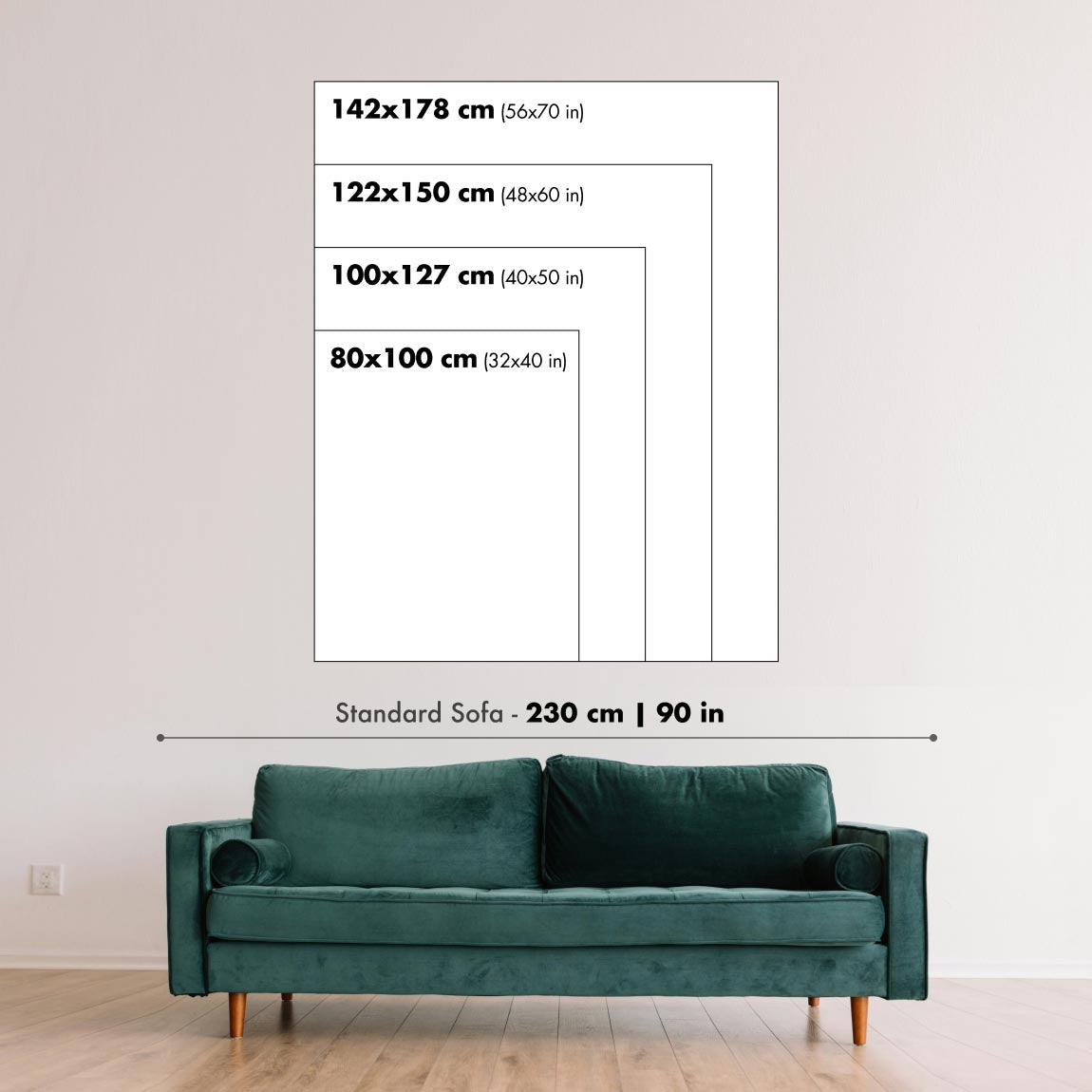
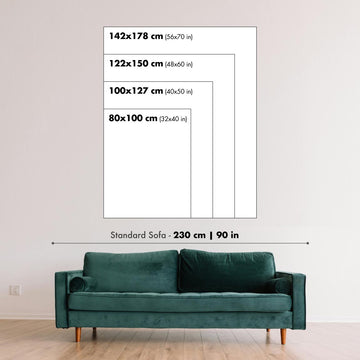
This map looks great at every size, but I always recommend going for a larger size if you have space. That way you can easily make out all of the details.
This map looks amazing at sizes all the way up to 70in (180cm). If you are looking for a larger map, please get in touch.
The model in the listing images is holding the 16x20in (40x50cm) version of this map.
The fifth listing image shows an example of my map personalisation service.
If you’re looking for something slightly different, check out my collection of the best old maps to see if something else catches your eye.
Please contact me to check if a certain location, landmark or feature is shown on this map.
This would make a wonderful birthday, Christmas, Father's Day, work leaving, anniversary or housewarming gift for someone from the areas covered by this map.
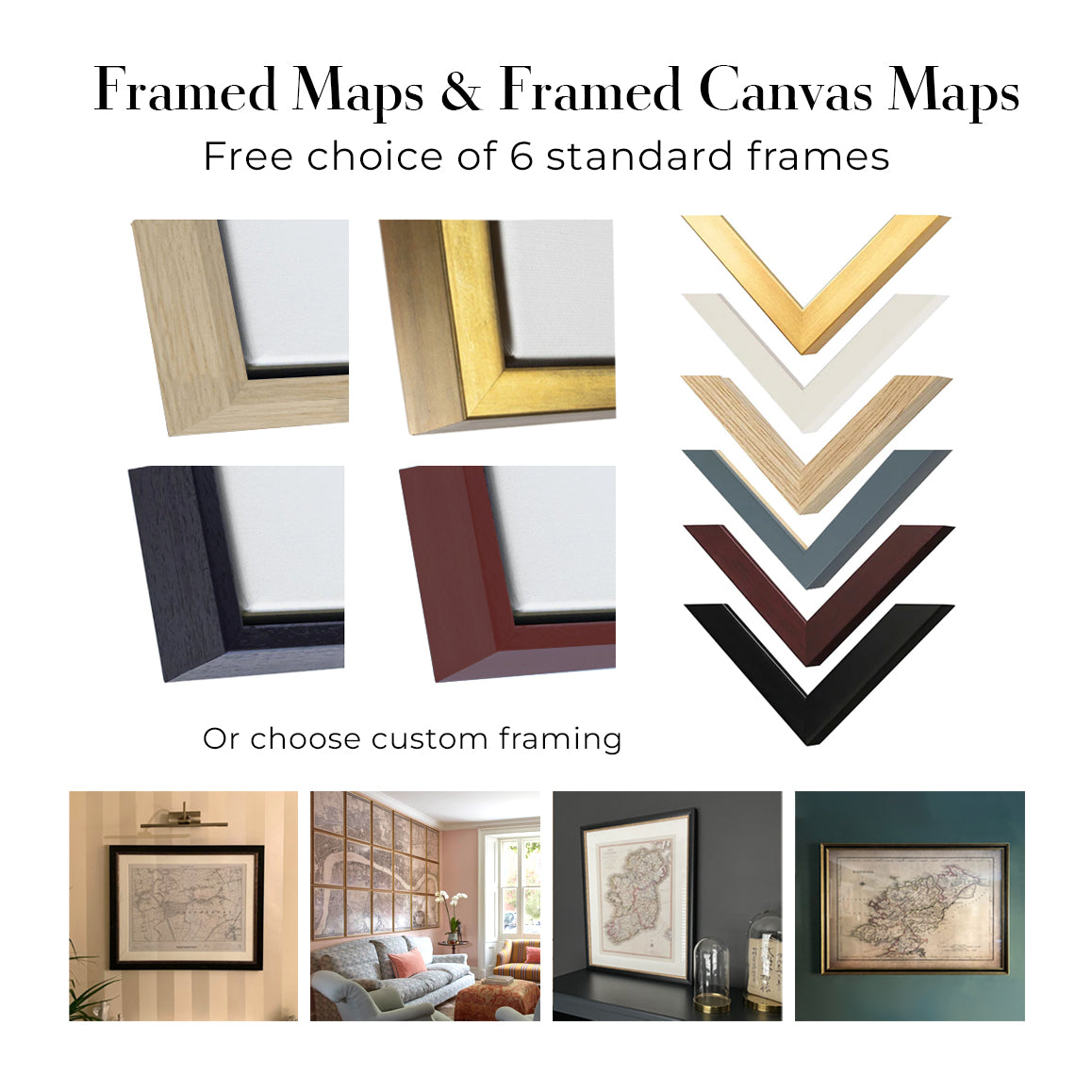
This map is available as a giclée print on acid free archival matte paper, or you can buy it framed. The frame is a nice, simple black frame that suits most aesthetics. Please get in touch if you'd like a different frame colour or material. My frames are glazed with super-clear museum-grade acrylic (perspex/acrylite), which is significantly less reflective than glass, safer, and will always arrive in perfect condition.
This map is also available as a float framed canvas, sometimes known as a shadow gap framed canvas or canvas floater. The map is printed on artist's cotton canvas and then stretched over a handmade box frame. We then "float" the canvas inside a wooden frame, which is available in a range of colours (black, dark brown, oak, antique gold and white). This is a wonderful way to present a map without glazing in front. See some examples of float framed canvas maps and explore the differences between my different finishes.
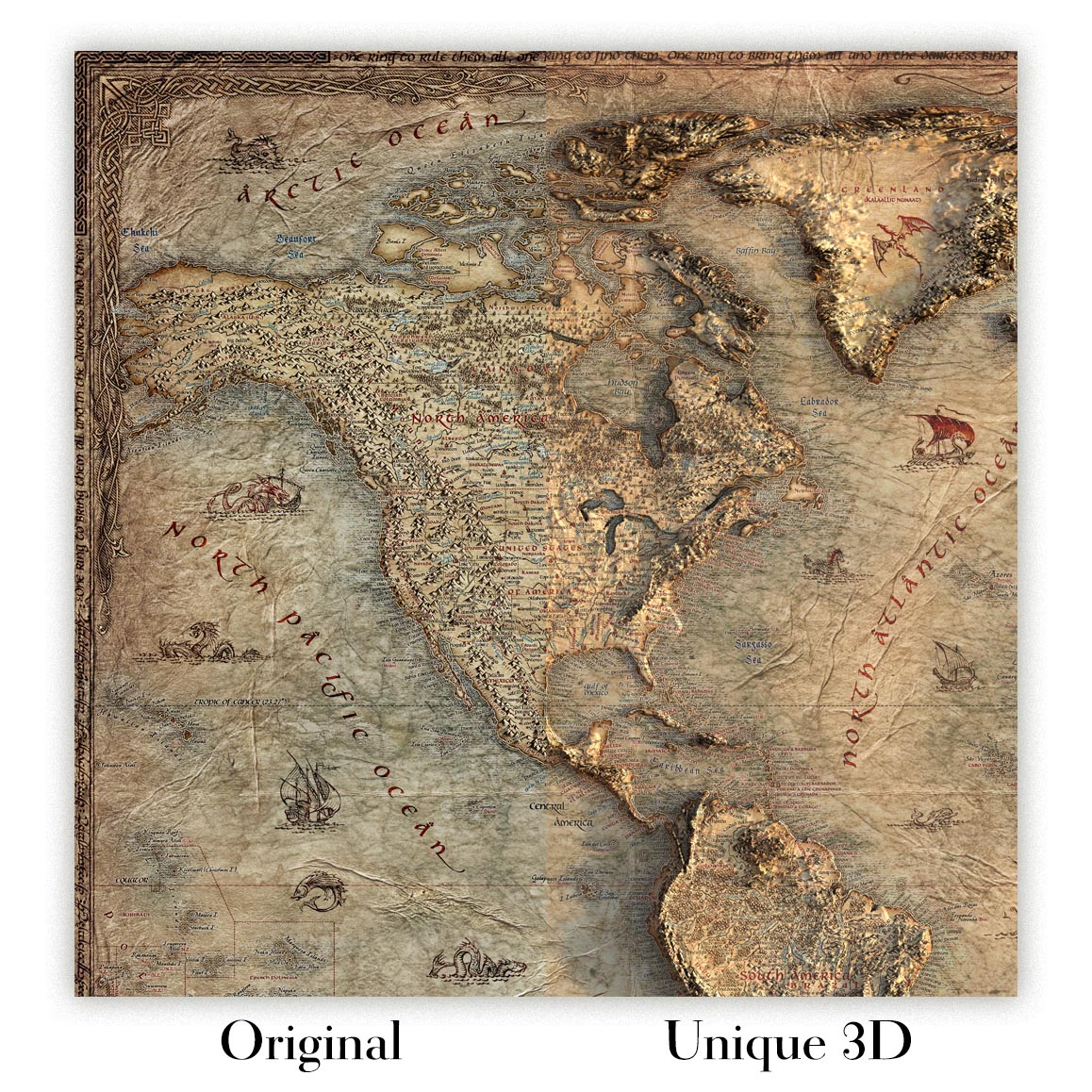
For something truly unique, this map is also available in "Unique 3D", our trademarked process that dramatically transforms the map so that it has a wonderful sense of depth. We combine the original map with detailed topography and elevation data, so that mountains and the terrain really "pop". For more info and examples of 3D maps, check my Unique 3D page.
Queensland, Edward Stanford’s authoritative rendering of the northeastern state, bears its original title simply, “Queensland,” and dates to 1904. Issued within Stanford’s distinguished atlas—first published in 1887 as the heir to John Arrowsmith’s London Atlas of 1858 after Stanford acquired Arrowsmith’s plates—this sheet reflects the thorough revisions of the atlas’s second edition from 1901. Stanford’s cartographic house fused scientific precision with luminous full-color lithography, presenting a polity newly situated within the Commonwealth of Australia while still shaped by late-colonial expansion. Relief is articulated with elegant hachures and punctuated by spot heights, while political districts are clearly tinted, inviting both synoptic reading and close study. The result is a document that captures Queensland at a transformative moment, balancing beauty, authority, and up-to-date geographic intelligence.
Design and topography are here harmonized with exceptional clarity. The sinuous eastern littoral tracks the Coral Sea, from the sand-fringed bays south of Brisbane to the complicated coastline facing the Gulf of Carpentaria, with nearby islands set off in precise stipple. The Torres Strait is studded with named islets and channels, signalling Queensland’s tropical gateway to New Guinea. Inland, the Great Dividing Range is drawn in fine hachures, cascading toward a web of rivers—Brisbane, Burnett, Mary, Fitzroy, Burdekin, Herbert and others—whose courses guide settlement and transport. District and county boundaries are cleanly color-washed, their typography meticulously graded to separate towns from pastoral out-stations. Spot heights punctuate key ranges and tablelands, while the coastal margin, capes and estuaries are crisply annotated, providing the navigator’s eye with the same confidence granted to the overland traveler.
Movement and communication—engines of Queensland’s modernity—thread the map. Roads and coach routes stitch interior districts to port towns, while railways are drawn as decisive strokes radiating from strategic hubs. Around Brisbane and the Darling Downs, lines scale the range toward Toowoomba and sweep westward into agricultural country; from Rockhampton, permanent way pushes inland toward the central plains; farther north, separate coastal sections at Mackay, Townsville and Cairns serve sugar ports and mining corridors, their eventual unification still in prospect. The Great Northern system reaches past Charters Towers toward the dry interior, as the Central Western tracks point on to Longreach and Winton. Most striking, telegraph lines leap across emptier spaces, including the famed trunk up Cape York Peninsula to Thursday Island, tying frontier outposts and lighthouse stations into a continental and imperial conversation.
The settlement pattern reads like a ledger of purpose and opportunity. Brisbane, the state capital, commands its river and the bays beyond, with suburbs and roadways etched into a growing metropolis. Rockhampton sits astride the Fitzroy system, a provisioning center for the interior; Gladstone claims a superb harbor just to the south. Northward, Mackay, Townsville and Cairns anchor discrete coastal economies—sugar, shipping, and access to mineral districts—while Bundaberg’s cane fields and distilleries speak to a fertile Burnett basin. Toowoomba crowns the Darling Downs as an inland market town, reached by the dramatic ascent over the range. Each urban name is nested within colored districts and counties, clarifying administration as well as trade, and together they chart Queensland’s pivot from scattered coastal entrepôts to an integrated network spanning rainforest, savannah, and reef-lined shore.
The map’s authority rests as much on pedigree as on execution. Stanford, successor to the Arrowsmith tradition, made his atlas one of the premier cartographic achievements of its era through relentless revision: new townships appear, routes extend, and boundaries are adjusted to mirror lived change. In this 1904 state, the judicious overlay of telegraph annotations, the calibrated palette of districts, and the disciplined use of hachures and spot heights exemplify best-practice geographic visualization at the turn of the century. It is a learned object, to be read as a chronicle of federation-era Queensland—its ports, ranges, rivers and remote stations—but also admired as a work of graphic art, where every line, tint and letterform contributes
Cities and towns on this map
- Brisbane
- Townsville
- Cairns
- Mackay
- Rockhampton
- Toowoomba
- Bundaberg
- Gladstone
Notable Features & Landmarks
- Full-color depiction of districts
- Hachured relief to indicate elevation
- Spot heights indicating significant elevations
- Detailed representation of settlements and counties
- Presence of roads and railroads
- Labeling of telegraph lines across the region
- Coastal lines and significant bodies of water, including the Gulf of Carpentaria
- Nearby islands, including some in the Torres Strait
Historical and design context
- Mapmaker/Publisher: Edward Stanford
- Date of creation: 1904
- Historical context: Part of an atlas first issued in 1887, succeeding John Arrowsmith’s London Atlas of 1858 after Stanford acquired the plates; belongs to the second edition published in 1901
- Design and style: Full-color lithography with relief shown by hachures and spot heights
- Historical significance: Regarded as one of the premier cartographic works of its era, illustrating artistic and technical achievements
- Updates: Meticulously revised across editions to reflect changes in geography and settlement patterns
Please double check the images to make sure that a specific town or place is shown on this map. You can also get in touch and ask us to check the map for you.
This map looks great at every size, but I always recommend going for a larger size if you have space. That way you can easily make out all of the details.
This map looks amazing at sizes all the way up to 70in (180cm). If you are looking for a larger map, please get in touch.
The model in the listing images is holding the 16x20in (40x50cm) version of this map.
The fifth listing image shows an example of my map personalisation service.
If you’re looking for something slightly different, check out my collection of the best old maps to see if something else catches your eye.
Please contact me to check if a certain location, landmark or feature is shown on this map.
This would make a wonderful birthday, Christmas, Father's Day, work leaving, anniversary or housewarming gift for someone from the areas covered by this map.
This map is available as a giclée print on acid free archival matte paper, or you can buy it framed. The frame is a nice, simple black frame that suits most aesthetics. Please get in touch if you'd like a different frame colour or material. My frames are glazed with super-clear museum-grade acrylic (perspex/acrylite), which is significantly less reflective than glass, safer, and will always arrive in perfect condition.
This map is also available as a float framed canvas, sometimes known as a shadow gap framed canvas or canvas floater. The map is printed on artist's cotton canvas and then stretched over a handmade box frame. We then "float" the canvas inside a wooden frame, which is available in a range of colours (black, dark brown, oak, antique gold and white). This is a wonderful way to present a map without glazing in front. See some examples of float framed canvas maps and explore the differences between my different finishes.
For something truly unique, this map is also available in "Unique 3D", our trademarked process that dramatically transforms the map so that it has a wonderful sense of depth. We combine the original map with detailed topography and elevation data, so that mountains and the terrain really "pop". For more info and examples of 3D maps, check my Unique 3D page.
Muchos de nuestros mapas y reproducciones de arte se eligen como regalos considerados para hogares, oficinas, despachos y lugares significativos.
Elija una opción enmarcada para el regalo más sencillo, listo para colgar, o elija una lámina sin enmarcar si el destinatario prefiere seleccionar su propio marco.
Producimos los pedidos localmente en 23 países de todo el mundo, por lo que a menudo los regalos pueden realizarse cerca del destinatario. Esto ayuda a que lleguen más rápido, viajen de forma más segura y eviten sorpresas por aduanas o aranceles de importación.
- Podemos entregar directamente al destinatario
- Las piezas enmarcadas llegan listas para colgar
- Las láminas sin enmarcar se embalan cuidadosamente en un resistente tubo protector
- Casi todos los pedidos se producen localmente, para regalar de forma más rápida y segura
- Las devoluciones de 90 días dan al destinatario tiempo para decidir
Si no está seguro de qué elegir, por favor contáctenos. Podemos ayudarle a escoger el mapa, tamaño, acabado u opción de entrega adecuados.
Para la mayoría de los pedidos, el tiempo de entrega es de aproximadamente 3 días laborables. Los productos personalizados y a medida tardan más, ya que tengo que hacer la personalización y enviártelo para su aprobación, lo cual suele tardar 1 o 2 días.
Tenga en cuenta que los pedidos enmarcados muy grandes suelen tardar más en fabricarse y entregarse.
Si necesitas que tu pedido llegue para una fecha determinada, por favor contáctame antes de hacer el pedido para que podamos encontrar la mejor manera de asegurarnos de que recibas tu pedido a tiempo.
Imprimo y enmarco mapas y obras de arte en 23 países alrededor del mundo. Esto significa que tu pedido se fabricará localmente, lo que reduce el tiempo de entrega y asegura que no se dañe durante el envío. Nunca pagarás aranceles de aduana o impuestos de importación, y pondremos menos CO2 en el aire.
Todos mis mapas y impresiones artísticas están bien empaquetados y enviados en un tubo resistente si no están enmarcados, o rodeados de espuma si están enmarcados.
Intento enviar todos los pedidos dentro de 1 o 2 días después de recibir tu pedido, aunque algunos productos (como mascarillas, tazas y bolsas de tela) pueden tardar más en fabricarse.
Si seleccionas Entrega Exprés al finalizar la compra, priorizaremos tu pedido y lo enviaremos por mensajería de 1 día (Fedex, DHL, UPS, Parcelforce).
La entrega al día siguiente también está disponible en algunos países (EE. UU., Reino Unido, Singapur, EAU), pero por favor intenta hacer tu pedido temprano en el día para que podamos enviarlo a tiempo.
Mi marco estándar es un marco de madera de fresno negro estilo galería. Es simple y tiene un aspecto bastante moderno. Mi marco estándar tiene alrededor de 20 mm (0.8 in) de ancho.
Utilizo acrílico super claro (perspex/acrylite) para el vidrio del marco. Es más ligero y seguro que el vidrio, y se ve mejor, ya que la reflectividad es menor.
Seis colores de marco estándar están disponibles de forma gratuita (negro, marrón oscuro, gris oscuro, roble, blanco y oro antiguo).El enmarcado y montaje/matizado personalizado está disponible si buscas algo diferente.
La mayoría de los mapas, arte e ilustraciones también están disponibles como un lienzo enmarcado. Utilizamos lienzo de algodón mate (no brillante), lo estiramos sobre un marco de madera de caja de origen sostenible, y luego 'flotamos' la pieza dentro de un marco de madera. El resultado final es bastante hermoso, y no hay cristal que se interponga.
Todos los marcos se proporcionan "listos para colgar", con una cuerda o soportes en la parte posterior. Los marcos muy grandes tendrán placas de colgar de alta resistencia y/o un listón de montaje. Si tienes alguna pregunta, por favor ponte en contacto.
Mira algunos ejemplos de mis mapas enmarcados y mapas en lienzo enmarcados.
Alternativamente, también puedo proporcionar mapas antiguos y obras de arte en lienzo, tablero de espuma, papel de algodón y otros materiales.
Si deseas enmarcar tu mapa o obra de arte tú mismo, por favor lee mi guía de tamaños primero.
Trabajamos con diseñadores de interiores, negocios de hostelería, profesionales del sector inmobiliario, oficinas y compradores corporativos tanto en piezas individuales como en proyectos coordinados de mayor envergadura.
Este mapa puede adaptarse a una pared, estancia o proyecto concretos, y nuestro taller puede ayudar a coordinar las dimensiones, el material y el enmarcado antes de la producción.
- Dimensiones exactas, de gran formato y a medida
- Enmarcado, montaje y materiales alternativos personalizados
- Piezas coordinadas para varias habitaciones o ubicaciones
- Personalización del mapa para señalar ubicaciones importantes o añadir detalles adicionales
- Asesoramiento sobre el mapa y el enmarcado por parte de nuestro taller
- Producción local para proyectos en todo el mundo
Mis mapas son reproducciones de mapas originales de altísima calidad.
Obtengo mapas originales y raros de bibliotecas, casas de subastas y colecciones privadas de todo el mundo, los restauro en mi taller de Londres y luego uso tintas e impresoras giclée especializadas para crear hermosos mapas que lucen incluso mejor que el original.
Mis mapas están impresos en papel de archivo mate (no brillante) sin ácido que se siente de muy alta calidad y casi como una tarjeta. En términos técnicos, el peso/grosor del papel es de 10 mil/200 g/m². Es perfecto para enmarcar.
Imprimo con tintas pigmentadas Epson ultrachrome giclée UV resistentes a la decoloración, algunas de las mejores tintas que puedes encontrar.
yo también puedo hacer mapas sobre lienzo, trapo de algodón y otros materiales exóticos.
Obtenga más información sobre The Unique Maps Co..
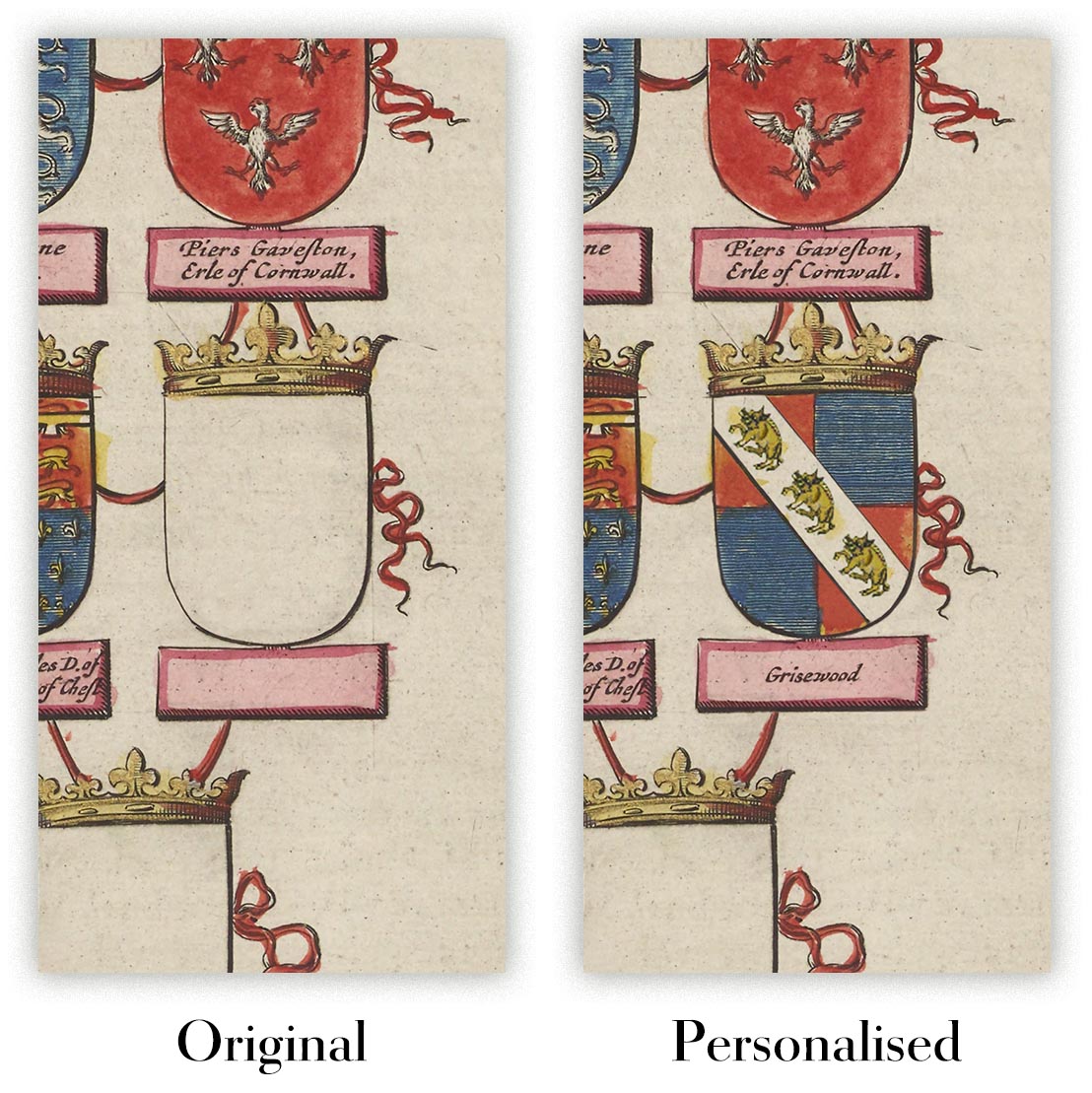
Personalización de mapas
Si está buscando el regalo perfecto de aniversario o inauguración de la casa, puedo personalizar su mapa para hacerlo verdaderamente único. Por ejemplo, puedo agregar un mensaje corto, resaltar una ubicación importante o agregar el escudo de armas de su familia.
Las opciones son casi infinitas. Por favor mira mi página de personalización de mapas para ver algunos maravillosos ejemplos de lo que es posible.
Para pedir un mapa personalizado, seleccione "personalizar su mapa" antes de agregarlo a su carrito.
Ponerse en contacto si buscas personalizaciones y personalizaciones más complejas.
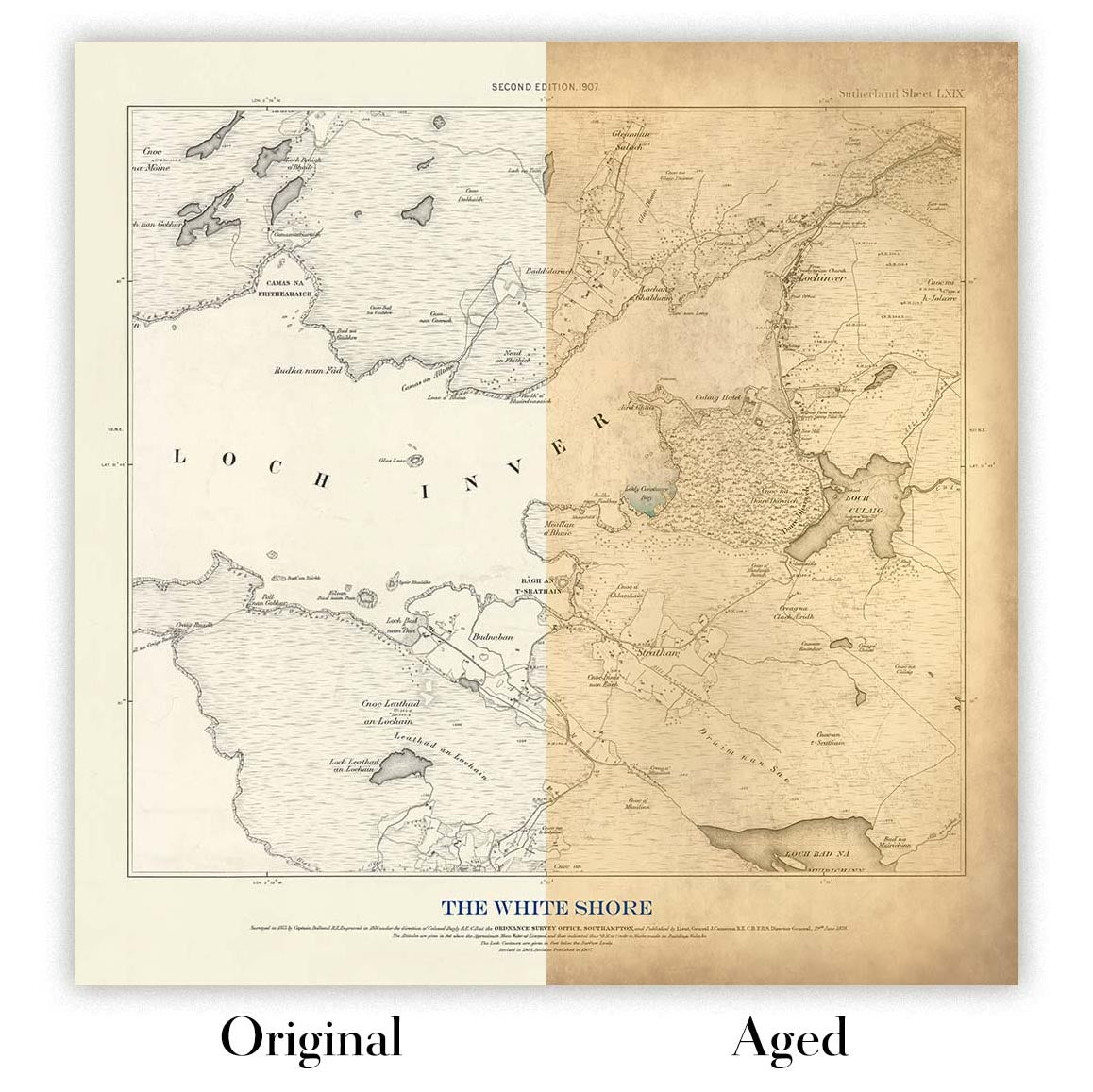
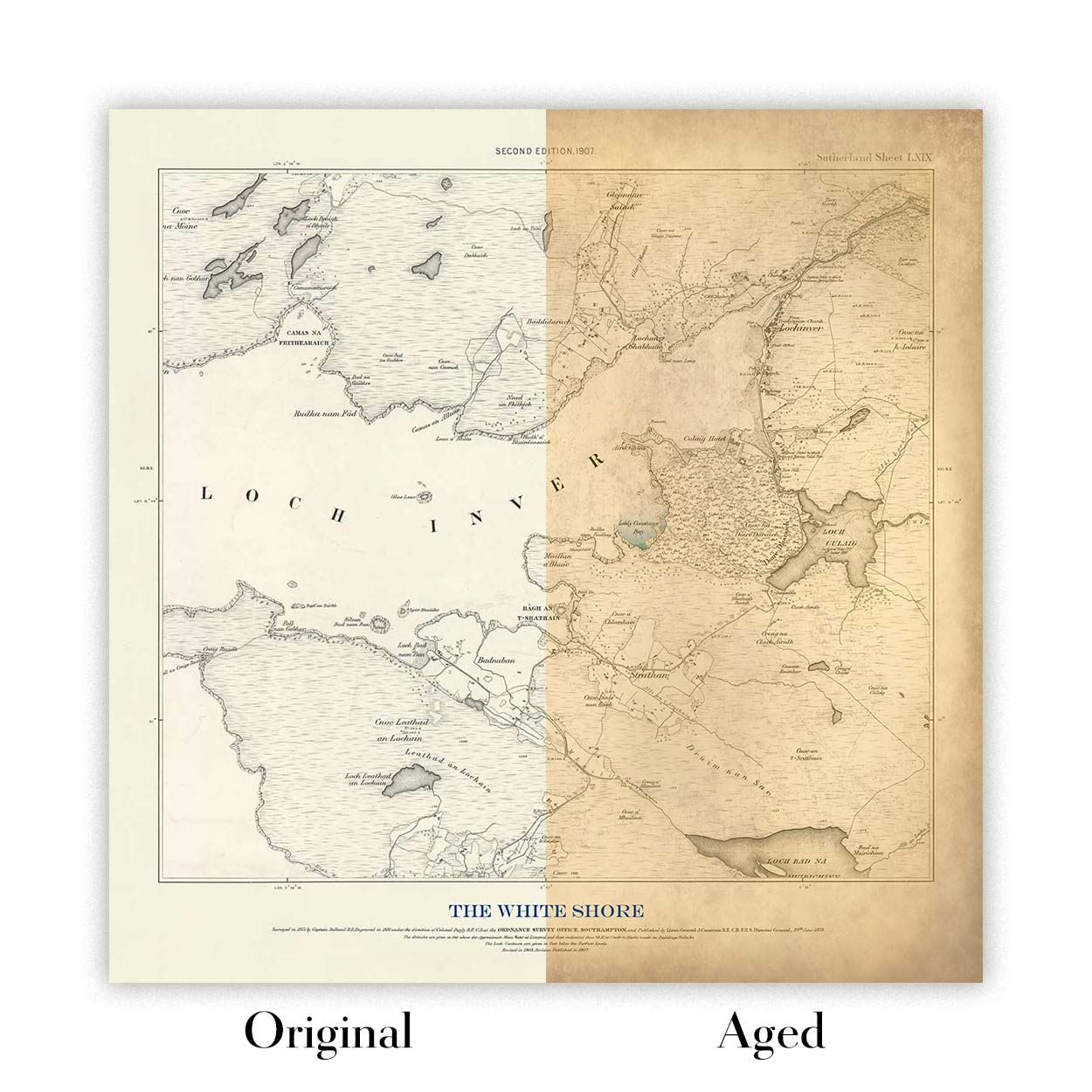
Envejecimiento del mapa
A lo largo de los años, los clientes me han preguntado cientos de veces si podían comprar un mapa que se viera uniforme. más viejo.
Bueno, ahora puedes hacerlo seleccionando Envejecido antes de agregar un mapa a tu carrito.
Todas las fotografías de productos que ve en esta página muestran el mapa en su forma original. Así es como se ve el mapa hoy.
Si selecciona Envejecido, envejeceré su mapa a mano, usando un proceso especial y único desarrollado a través de años de estudiar mapas antiguos, hablar con investigadores para comprender la química del envejecimiento del papel y, por supuesto... ¡mucha práctica!
Si no estás seguro, quédate con el color original del mapa. Si quieres algo un poco más oscuro y más viejo buscando, opte por Envejecido.
Llevamos restaurando y produciendo mapas y láminas artísticas desde 1984, y respondemos por cada pieza.
Todos los pedidos están cubiertos por nuestra garantía de 10 años y nuestra garantía de entrega sin daños. Si su pieza llega dañada, la sustituiremos o la volveremos a producir sin cargo alguno. Si cualquier otro aspecto no es correcto, contacte con nuestro equipo de taller y lo resolveremos con prontitud.
Consulte nuestra política de devoluciones y reembolsos para conocer todos los detalles.


